Purity and alloy composition
9k gold is 37.5% gold mixed with copper, silver, and zinc alloys. 18k is 75% gold. The higher alloy content in 9k makes it harder and more scratch-resistant, which is a genuine practical advantage for hands-on jobs. The tradeoff is that 9k looks paler in yellow and slightly greener in white gold compared to 18k.
Price gap in South Africa
Gold is priced by mass at the SARB spot rate. An 18k ring contains twice the gold content of a 9k ring at the same weight, so it costs meaningfully more. A typical 3g 18k band contains 2.25g of pure gold. A 3g 9k band contains 1.125g. The rest is alloy either way.
Durability for diamond settings
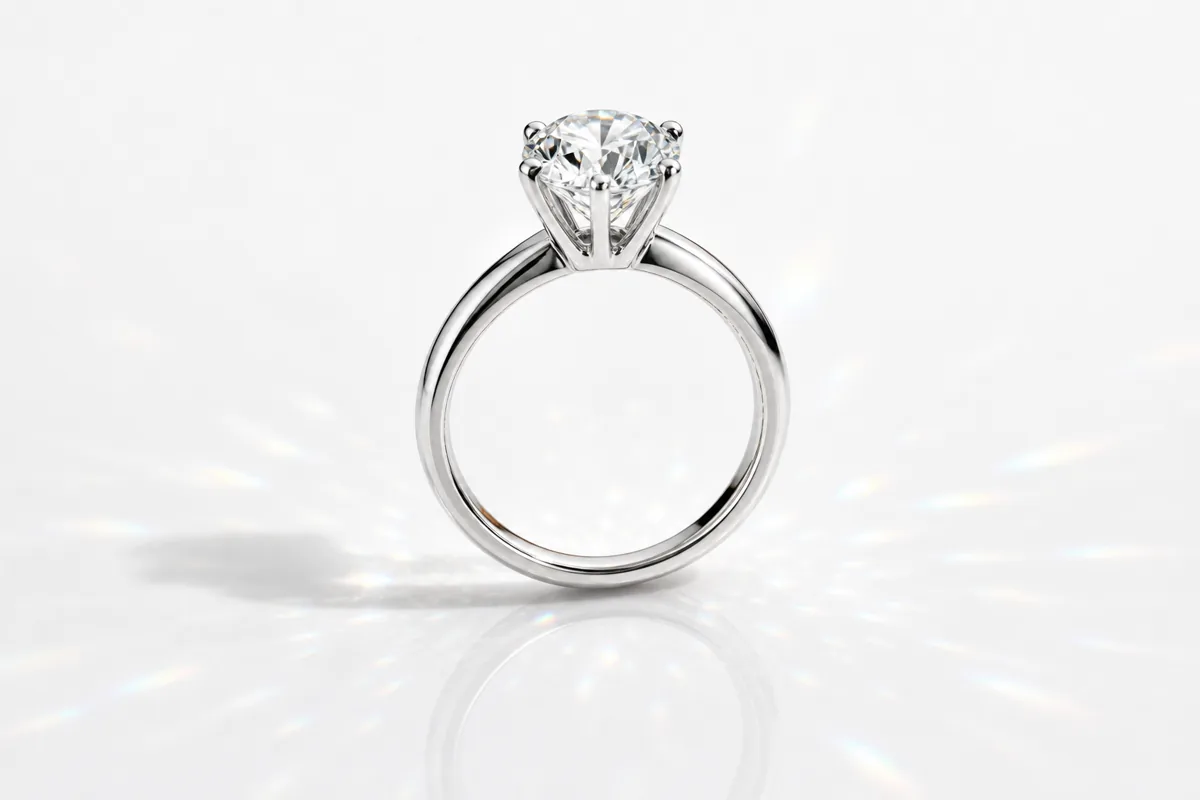
Prong settings holding a diamond need strength. 18k prongs are slightly softer than 9k but hold their shape well with normal wear. Jewellers commonly work in 18k because it is easier to solder and resize. 9k can be more brittle under rework.
Resale and Prodiam context
18k diamond rings are the standard benchmark in the trade. When Prodiam values a diamond-set ring, the stone component is assessed separately from the metal. The gold weight is a secondary factor. Certified natural diamonds in 18k settings are the most liquid category.
Decision table
Use the details, not a shortcut.
| Factor | 9k gold | 18k gold |
|---|---|---|
| Gold purity | 37.5% | 75% |
| Colour intensity | Paler yellow or white | Richer yellow, brighter white |
| Hardness | Harder alloy, more scratch-resistant | Slightly softer, easier to rework |
| Price (same weight) | Lower (less gold content) | Higher (more gold content) |
| Resale recognition | Standard, widely accepted | Trade benchmark for diamond jewellery |
Direct answers
Common questions
Is 9k gold real gold?
Yes. 9k gold is genuine gold at 37.5% purity. It is legally hallmarked and sold by reputable jewellers across South Africa.
Why does 18k cost more?
It contains more gold. A gram of 18k gold holds 0.75g of pure gold versus 0.375g in 9k. The gold spot price drives that difference.
Will a 9k ring last as long?
Yes. 9k is harder and resists surface scratches slightly better. The ring metal will last decades with normal care regardless of karat.
Which karat is standard for engagement rings in SA?
18k is the most common choice for engagement rings in South Africa. 9k is more common in fashion jewellery and lower-budget wedding bands.
Does karat affect the diamond certificate?
No. The diamond certificate from GIA or IGI describes the stone's cut, colour, clarity, and carat weight. Metal karat is entirely separate.