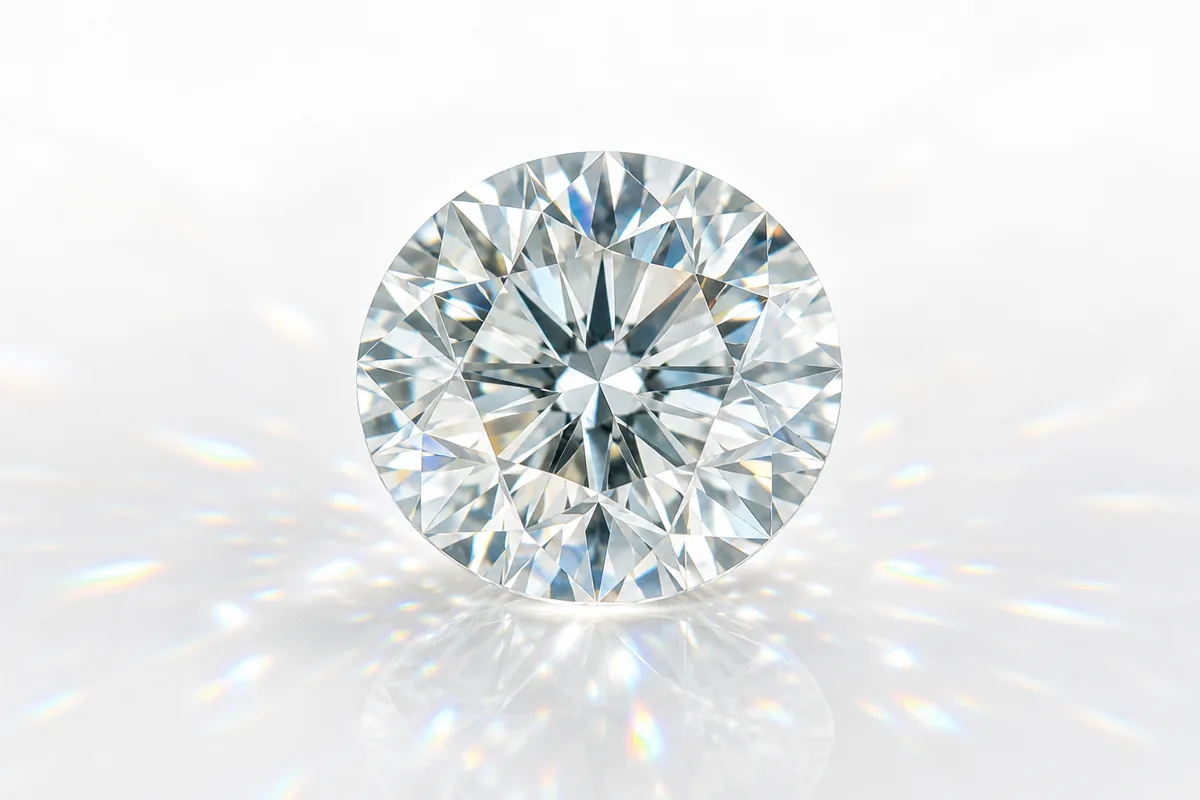
What cut means
A round brilliant, oval, emerald, cushion, or pear can all be shaped beautifully or poorly. Cut quality describes how well the stone handles light. In buyer language: how bright, lively, and balanced the diamond looks in normal viewing conditions.
Why Prodiam cares
Prodiam is linked to the bench that cuts and handles stones, so its valuation lens is not only retail appearance. It looks at certificate data, proportions, make, and resale liquidity together.
What to ask before buying
Ask for the certificate, measurements, table percentage, depth percentage, polish, symmetry, fluorescence, and clear video in daylight-style lighting. For a round brilliant, avoid treating carat weight as the only shortcut.
Decision table
Use the details, not a shortcut.
| Signal | Healthy sign | Risk sign |
|---|---|---|
| Brightness | Even return across the face | Dark centre or dead edge |
| Symmetry | Balanced pattern | Uneven arrows or lopsided outline |
| Spread | Looks right for its carat | Carries weight in hidden depth |
| Certificate | Cut/proportion data present | No lab report or vague appraisal |
Direct answers
Common questions
Is cut the same as diamond shape?
No. Shape is the outline, such as oval or round. Cut quality is how well the facets return light.
Should I choose cut over carat?
If the diamond is for beauty, cut usually deserves priority. Extra weight does not help if the stone looks dull.
Can Prodiam inspect cut quality?
Yes. Prodiam handles certified natural diamonds and can assess the stone and certificate before purchase or sale discussions.