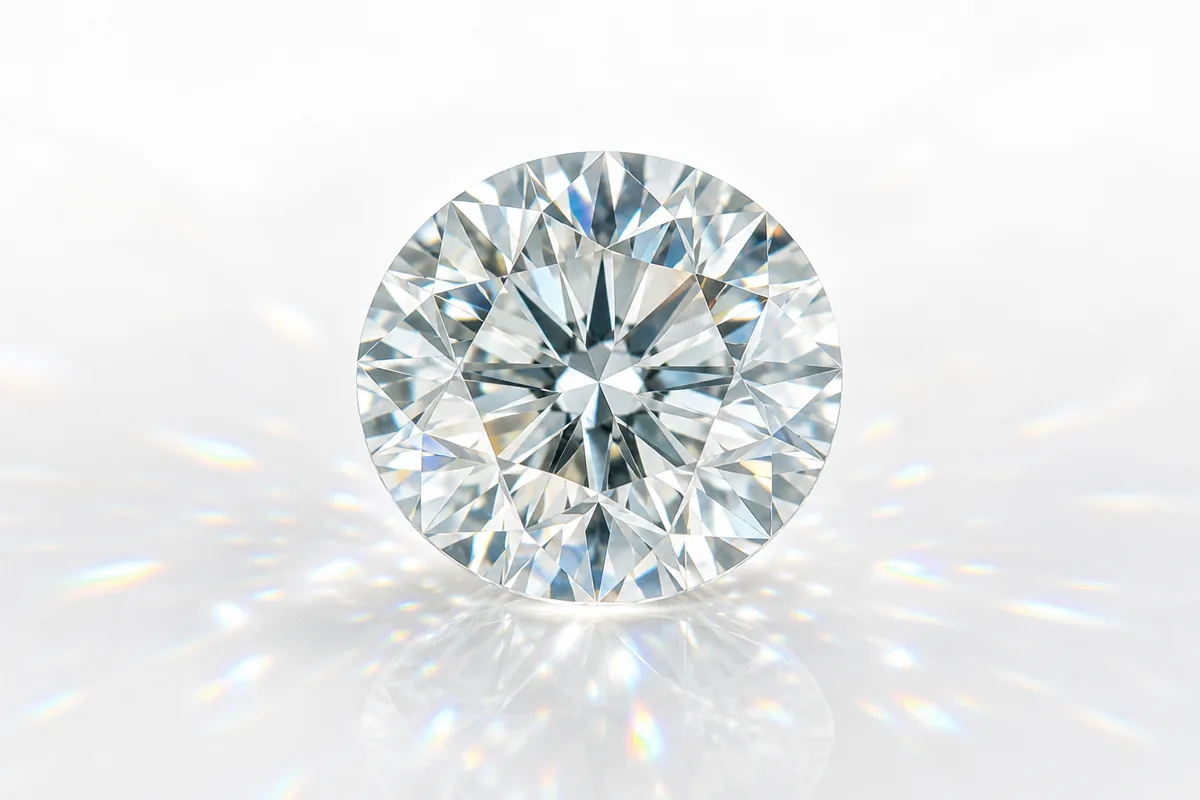
What chain jewellers actually sell
Major SA chains such as a national jewellery chain, Hirsch's, and a national jewellery chain sell genuine diamonds. Natural diamonds are standard in engagement ring lines. Lab-grown diamonds have entered the range at some chains in recent years. The distinction between natural and lab-grown is legally required to be disclosed in SA. What varies between chains is how much grading data they provide. Some use GIA-certified stones with full reports. Others use in-house or house-branded grading that is harder to compare across retailers.
Why grading transparency matters
A GIA grade is set by an independent laboratory with no financial interest in your sale. A retailer's own grading assessment may be accurate, but you cannot cross-check it against an independent benchmark without having the stone retested. For a purchase above R5,000, the difference between a GIA G VS2 and an in-house 'H SI1' is not trivial. When the same stone is later appraised or sold, independent buyers reference GIA or equivalent data, not the chain's internal label.
The lab-grown disclosure gap
SA consumer law requires retailers to disclose if a diamond is lab-grown rather than natural. In practice, disclosure quality varies across retail formats. If a salesperson cannot immediately confirm whether a stone is natural or lab-grown, or cannot produce a certificate that states this, ask for documentation in writing before purchase. The distinction has significant value implications: lab-grown diamond prices have fallen sharply in recent years, while natural diamond prices have held more stable.
Independent verification via Prodiam
If you have bought from a chain jeweller and want the stone independently assessed, or if you want to understand what your chain-bought diamond would fetch on the open market, an independent specialist can examine the stone and the certificate. Prodiam, in Bedfordview, can assess natural diamonds against market benchmarks. This is relevant before you insure a ring, before you consider selling, and before you buy a significant piece without a GIA report. Book at Prodiam.
Decision table
Use the details, not a shortcut.
| Factor | Chain jeweller | Specialist dealer (e.g. Prodiam) |
|---|---|---|
| Diamond authenticity | Real diamonds (natural or lab-grown) | Natural diamonds, verified |
| Grading source | GIA or in-house grade (varies) | GIA or equivalent, independently issued |
| Price transparency | Fixed retail price | Market-benchmarked offer or sale |
| Lab-grown vs natural disclosure | Required by law; quality varies | Clearly stated, certificate-backed |
| Independent valuation available | Not typically offered | Yes, by appointment |
Direct answers
Common questions
Is it illegal for a chain to sell lab-grown diamonds without disclosure?
Yes. SA consumer law requires disclosure. If a retailer cannot confirm whether your stone is natural or lab-grown, demand written documentation before any purchase.
What does an in-house diamond grade mean?
The retailer assessed the stone using their own staff or gemologists rather than an independent lab. It may be accurate, but it cannot be cross-checked against a published GIA grading standard without retesting.
Can I get a chain-bought diamond regraded by GIA?
Yes. You can submit a loose diamond to GIA for grading. A set diamond can sometimes be graded in its mounting, though results are less precise. The stone must be sent to a GIA lab via an authorised submission agent.
Have lab-grown diamond prices fallen in SA?
Yes. Lab-grown diamond prices have dropped significantly in recent years due to increased production volume. Natural certified diamonds have shown more price stability over the same period.
Does Prodiam buy diamonds originally purchased from chain jewellers?
Prodiam evaluates the stone and certificate on their merits, regardless of where the stone was originally purchased. The origin retailer does not affect the assessment.
Should I buy a diamond from a chain or a specialist dealer?
Both can sell genuine diamonds. The question is whether you want a curated retail experience with set jewellery, or a stone-first transaction with full certificate data comparison. For purchases above R15,000, certificate transparency and resale value are worth prioritising.