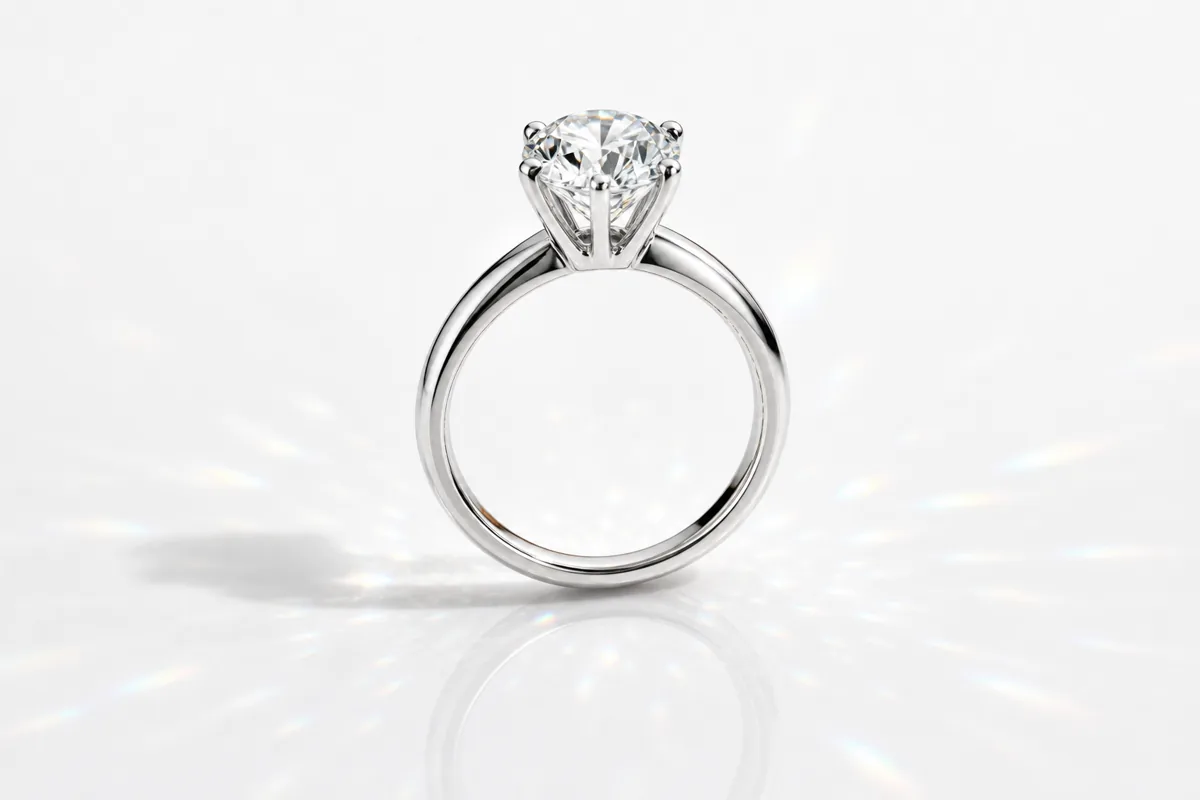
How carat translates to size
One carat equals 0.2 grams. A round brilliant at 1.00ct typically measures around 6.4-6.5mm in diameter, but a shallow stone can measure 6.8mm and a deep one 6.1mm at the same weight. Millimetre measurements matter as much as carat weight.
Shapes that look large for their weight
Oval, marquise, and pear outlines spread more face-up area per carat than a round. Elongated shapes can appear 10-15% larger than a round of the same carat at certain ratios. Cushion and radiant cuts carry more weight below the girdle and look slightly smaller.
Settings that enhance apparent size
A halo setting adds a border of smaller stones that frames the centre and increases visible diameter. A thin, low-profile band makes the centre stone look proportionally larger. Bezel settings can reduce perceived size because the metal rim covers the girdle.
Price reality for large natural diamonds
Natural diamond prices rise steeply at magic weight thresholds: 0.50ct, 1.00ct, 1.50ct, 2.00ct, and 3.00ct. Buying just below a threshold, such as 0.90ct or 1.90ct, can deliver nearly the same visual result at a lower price, provided cut quality is maintained.
Decision table
Use the details, not a shortcut.
| Carat range | Typical face-up diameter (round) | Visual impression |
|---|---|---|
| 0.50ct | 5.1-5.2mm | Noticeable, modest |
| 1.00ct | 6.4-6.5mm | Clear centre stone presence |
| 1.50ct | 7.3-7.4mm | Statement size |
| 2.00ct | 8.1-8.2mm | Large, high visibility |
| 3.00ct | 9.3-9.4mm | Very large, investment grade |
Direct answers
Common questions
What carat is considered a big diamond ring?
That depends on context, but 1.50ct and above is generally where a stone draws attention in normal settings. For an engagement ring, many South African buyers consider 1.00ct a meaningful size.
Does a bigger diamond always cost more?
Yes, per comparable quality. But a well-cut 1.00ct can cost less and look better than a poorly cut 1.20ct with a deep pavilion that hides weight.
What shape looks the largest per carat?
Marquise and oval tend to look largest per carat due to elongated spread. Pear is similar. Round brilliant looks slightly smaller but returns more light than most other shapes at the same grade.
Can I get a large-looking ring on a budget?
Yes. Choose a shape with good spread, prioritise cut quality, select an eye-clean SI clarity grade, and use a setting with a halo or thin band to maximise perceived size.
Should I buy a certified diamond for a large ring?
A recognised grading report from a known lab is strongly recommended for any stone above 0.50ct. It protects resale value and makes insurance and estate documentation cleaner.