Why two diamonds at the same carat can look different
A diamond carries its weight in three dimensions. Two stones at 1.00ct can have different millimetre diameters depending on how deep the cutter ground the stone. A shallower, well-proportioned diamond often looks larger face-up than a deeper stone of the same weight. Always compare measurements, not only the carat figure on the certificate.
Shapes that maximise face-up size
Oval, marquise, and pear shapes tend to look larger face-up per carat than round brilliants. Elongated shapes cover more surface area for the same weight. A 1.00ct oval often looks similar to a 1.20ct round. Emerald cuts have a large open table and read as substantial even at moderate weights.
Setting choices that add visual presence
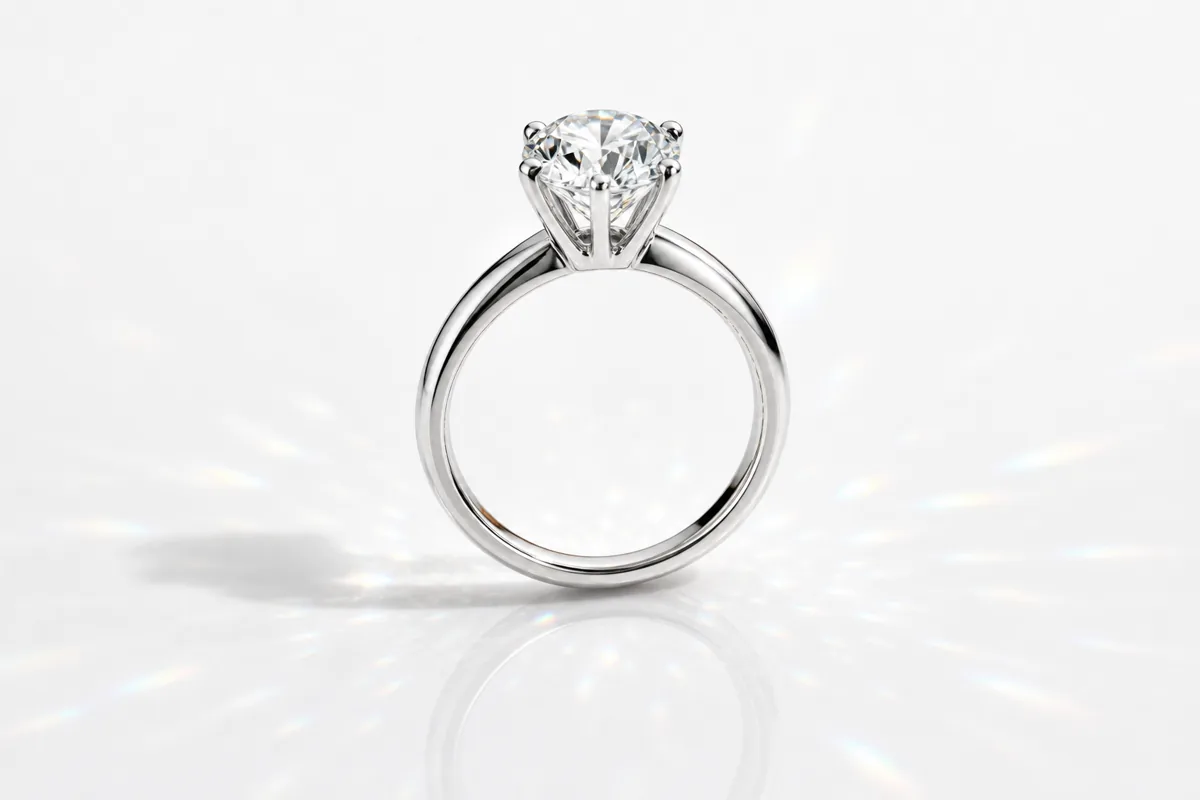
A halo setting adds a border of smaller diamonds around the centre stone, increasing the apparent size meaningfully. A thin, delicate band makes the centre stone look proportionally larger. Solitaire settings on thin bands are a common choice when the goal is making the centre stone the focal point.
Buying a certified stone with good spread
When selecting, look for the diameter in the certificate measurements alongside the table percentage and depth percentage. A stone with proportions optimised for spread will show this in its data. Prodiam in Bedfordview, Johannesburg, handles certified natural diamonds and can discuss stone selection based on spread and cut quality. Contact Prodiam.
Decision table
Use the details, not a shortcut.
| Shape | Face-up size relative to round at same carat | Notes |
|---|---|---|
| Round brilliant | Baseline | Most resale liquidity |
| Oval | 10-15% larger | Elongates the finger |
| Marquise | Up to 20% larger | Dramatic, needs protected tips |
| Pear | 15% larger | Directional, suits certain hand shapes |
| Emerald cut | Large open face, less sparkle | Shows colour and clarity more clearly |
Direct answers
Common questions
Is a bigger carat always a better ring?
Not necessarily. A well-cut 0.90ct that is eye-catching often looks better than a poorly proportioned 1.10ct. Face-up size and light return matter alongside weight.
Does a halo always make a diamond look bigger?
Yes, in most designs. A halo adds effective diameter and gives the impression of a larger centre stone. It also adds a layer of protection to the centre stone's girdle.
Are large diamond rings common in South Africa?
Yes. Centre stones from 0.50ct through 2.00ct are popular for engagement and wedding rings. Availability and pricing depend on shape, cut, colour, clarity, and certification.
What is a good size for a wedding ring diamond?
There is no standard. Budget, finger size, lifestyle, and preference all shape the decision. The goal is a ring the wearer feels confident in every day.
Can Prodiam help me select a diamond with good spread?
Yes. Prodiam at The Paragon, Bedfordview, handles certified natural diamonds. Contact a qualified specialist for assistance.