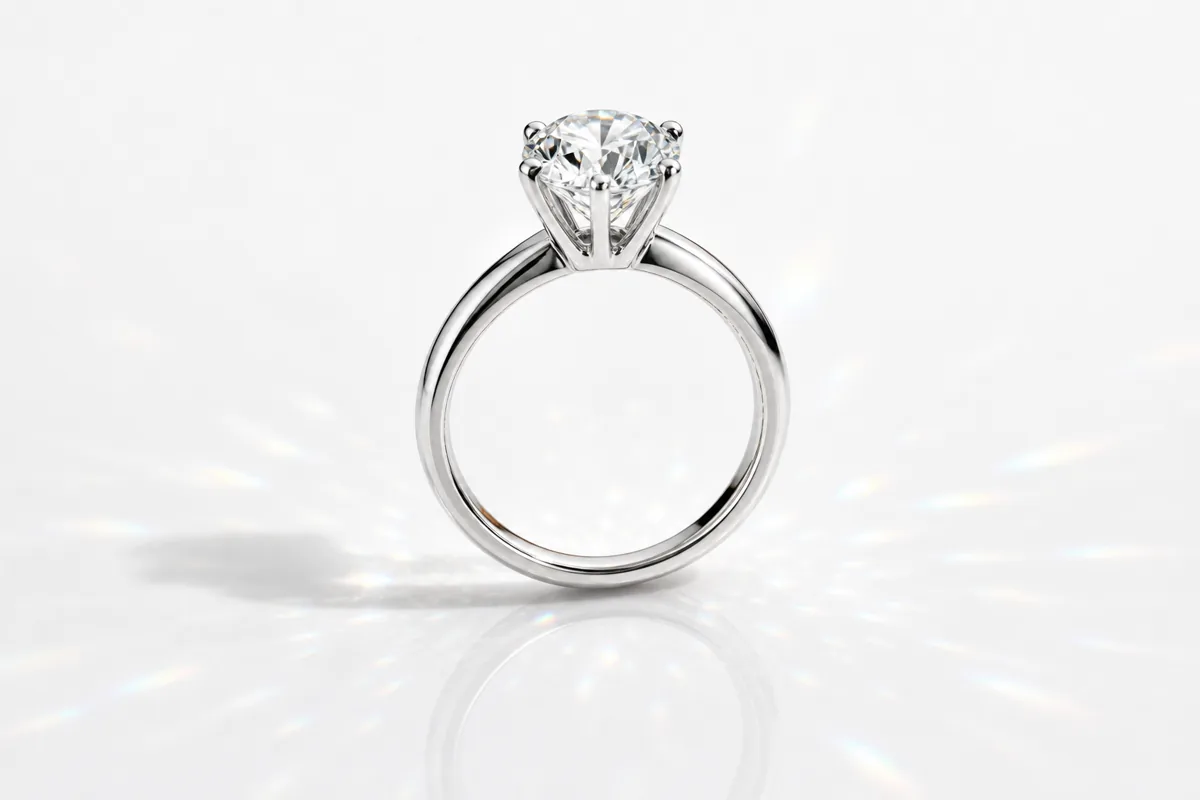
What the certificate tells you
A GIA or IGI report on a diamond stud earring confirms carat weight, colour grade, clarity grade, cut quality, and fluorescence. Without it, you are buying the setting and a sales pitch. For a pair of studs, both stones should carry matching or documented grades so the set holds value together.
Stud sizes and what they cost
Common stud sizes run from 0.25ct per ear to 1.00ct per ear. Price varies with colour, clarity, and cut quality as much as with carat. A 0.50ct total weight pair in G/SI1 with a GIA certificate will trade and sell differently from the same visual appearance in an uncertified stone.
Setting choices that affect longevity
Four-claw and bezel settings are the most practical for daily earring wear. Prong settings show more of the stone but require inspection every year or two to confirm the claws have not worked loose. Bezel settings add durability for active wearers.
Buying from a Cape Town dealer vs. a specialist
Cape Town retail margins on diamond jewellery typically cover shop overhead, design, and staff. A specialist dealer focused on certified natural diamonds can assess specific stone quality rather than selling a finished piece at a set margin. Prodiam in Bedfordview handles certified natural diamonds and can assess and transact on diamond earring stones for buyers who want expert verification before committing.
Decision table
Use the details, not a shortcut.
| Total carat weight | Typical colour range | What to check |
|---|---|---|
| 0.20-0.40ct tw | G-H most common | Certificate present, prongs secure |
| 0.50ct tw | F-H standard range | Matching grades, eye-clean clarity |
| 1.00ct tw | E-G premium | GIA report, cut quality, fluorescence |
| 2.00ct tw+ | D-F most valuable | Both certs, matching appearance |
| Any size, uncertified | Unknown | Request lab report before purchase |
Direct answers
Common questions
What carat weight is standard for diamond stud earrings?
Most buyers choose between 0.50ct and 1.50ct total weight. The right size depends on face proportion, budget, and whether the earrings are for daily wear or special occasions.
Do diamond stud earrings hold their value?
Certified natural diamond studs in recognised grades retain value better than uncertified stones. Matching lab reports for both stones help when reselling or upgrading.
What is the difference between natural and lab-grown diamond earrings?
Natural diamonds form over geological time. Lab-grown diamonds have the same physical properties but trade at lower resale values. Both can look identical. The certificate and price should reflect which type you are buying.
Are Cape Town diamond prices the same as Johannesburg?
Retail pricing varies by store, not primarily by city. The diamond itself is priced on its certificate grades and market demand. A stone in Cape Town is valued on the same grade benchmarks as one in Johannesburg.
Should I insure diamond stud earrings?
Yes. Certificate documents support insurance valuation. Keep the grading reports and purchase receipt in a secure place separate from the jewellery.
Can I sell diamond earrings back to a dealer?
Yes, though resale price depends on the certificate, grade, market demand, and whether the stones are set or loose. A specialist can assess both set and loose stones.