Stud versus drop earrings
Studs carry a single stone or cluster per ear. Drop and dangle styles use links or chains to hang stones below the lobe. Studs are the most traded style in South Africa because they suit daily wear and have cleaner resale. Drop earrings depend heavily on design and maker for secondary value.
Metal and setting choice
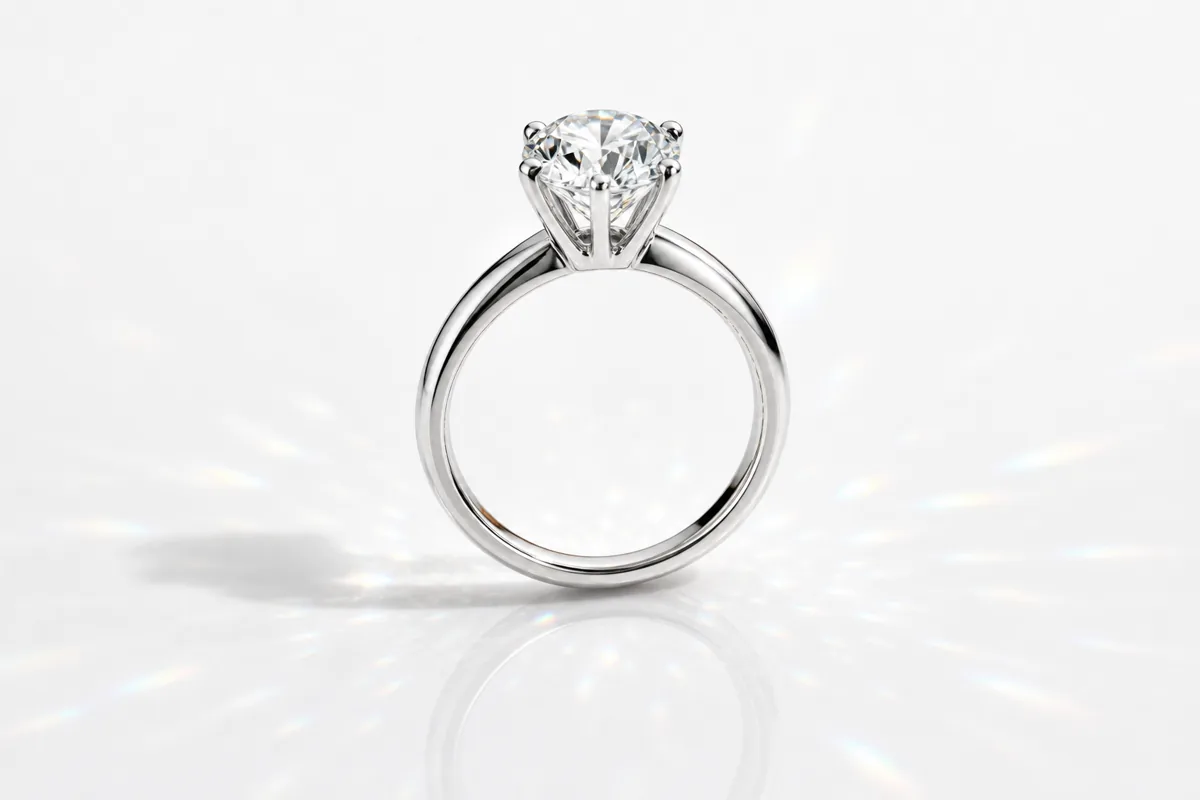
White gold and platinum show diamond colour most clearly. Yellow gold suits warmer colour grades and costs less in labour. Claw settings let light enter from more angles; bezel settings protect the girdle in active wear. Ask the jeweller to confirm the metal hallmark before purchase.
Certification for earring stones
Pairs below 0.30ct per stone are rarely certified individually. Pairs from 0.30ct and up can carry GIA, AGS, or SABS-recognised reports. For resale or insurance, certification at meaningful weights reduces disputes over quality and value.
Prodiam and diamond earrings
Prodiam handles certified natural diamonds from its Bedfordview premises in Johannesburg. If you are sourcing stones for earrings or need a valuation on an existing pair, contact the team at a qualified specialist or on a qualified specialist.
Decision table
Use the details, not a shortcut.
| Factor | What to check | Why it matters |
|---|---|---|
| Setting style | Claw count, prong condition | Loose claws lose stones |
| Metal stamp | 750 (18ct gold), 950 (platinum) | Confirms metal purity |
| Stone certification | GIA or recognised lab report | Protects resale and insurance value |
| Carat split | Total weight versus per-stone weight | Misleading totals are common |
| Colour match | Both stones same grade band | Mismatched tones visible at close range |
| Fluorescence | Listed on cert if present | Can affect appearance under UV-rich lighting |
Direct answers
Common questions
Do diamond earrings need a certificate?
Not legally, but a certificate from GIA or a recognised lab protects you on resale and insurance. For stones above 0.30ct each, it is worth requesting one.
What metal is best for diamond studs?
White gold and platinum show colour best. Yellow or rose gold suits warmer stones and tends to cost less. Both hold diamonds securely when the setting is properly made.
How do I know if my earrings have real diamonds?
A loupe check, hardness test, or inspection at a specialist confirms natural diamond versus simulant. A grading report removes all doubt on certified stones.
Can I sell diamond earrings in South Africa?
Yes. Specialist buyers like Prodiam assess certified pairs against current trade benchmarks. Bring the original certificates and any purchase documentation.
What carat weight is typical for earrings?
Common sizes run from 0.20ct to 1.00ct total weight for studs. Larger stones exist but increase price sharply. The right size depends on budget and daily wear requirements.
Are lab-grown diamond earrings worth less?
Lab-grown stones trade at a significant discount to natural diamonds of similar grades. Resale value has compressed further in recent years. Factor that in at purchase.