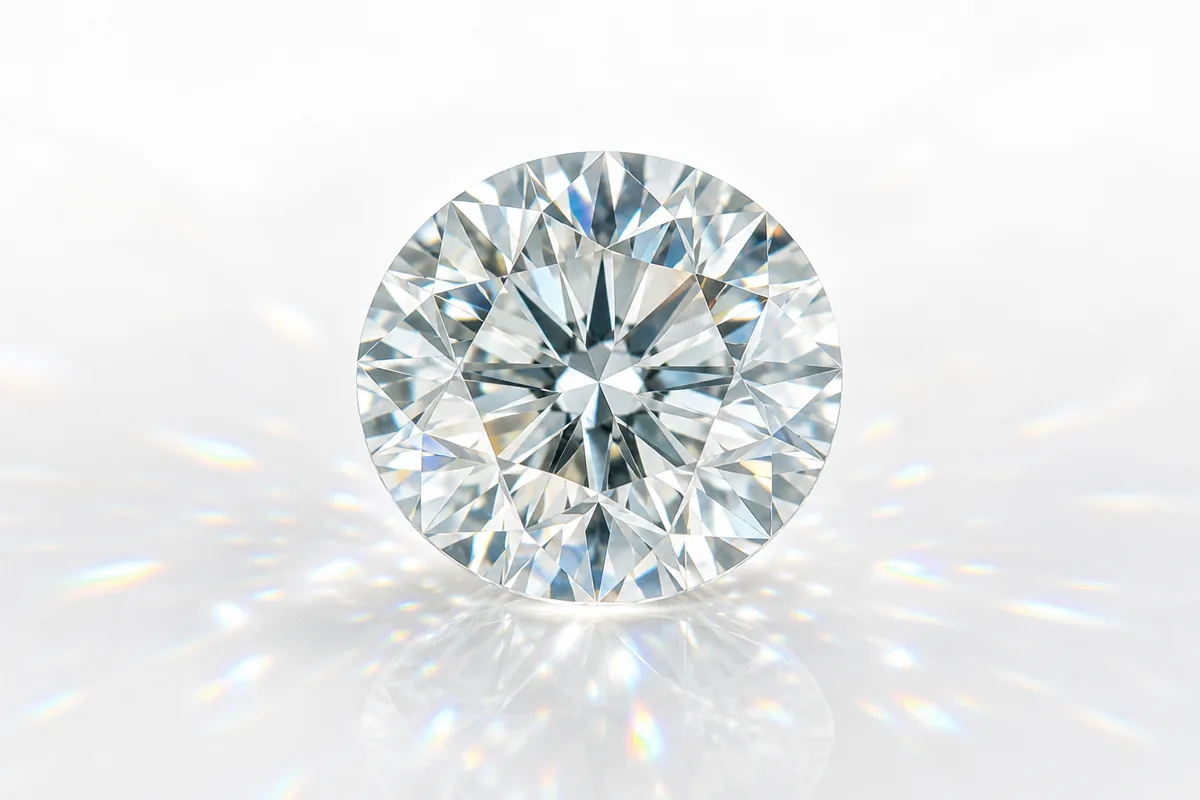
When resetting makes sense
Resetting is worth considering when the stone is the asset and the setting is not. Inherited diamonds often arrive in older styles that do not suit the new owner. Damaged or worn mounts, cracked claws, or bent shanks can put the stone at risk. A change from a cluster to a solitaire, or from yellow gold to platinum, is also a common trigger. The reset preserves the stone's value while updating the piece.
What to check before resetting
Before any work begins, the stone should be inspected under magnification to assess its current condition. Any existing inclusion near the girdle, a weak feather, or a chipped facet changes how the stone should be set and handled. The grading certificate should be verified against the inscription. For a certified natural diamond, that documentation protects both the owner and the craftsperson doing the work.
Setting styles and their demands on the stone
A bezel setting puts metal around the full girdle and suits stones with minor edge chips. Prong settings expose more of the stone but require the girdle to be clean and strong. Pavé or channel-set side stones require precise alignment and skilled bench work. The choice of setting affects how the stone interacts with light and how secure it sits in daily wear. Not every stone is ideal for every setting style.
Prodiam's approach to resetting certified natural diamonds
Prodiam manufactures jewellery through its polishing and fabrication arm a South African cutting works, based in Bedfordview. The bench handles certified natural diamonds and can advise on resetting options that suit the stone's proportions and condition. Sister company a South African cutting works handles broken-set stones. If the existing mount has been damaged or the stone has come loose, Prodiam can assess the stone's security before committing to a reset design. Contact: Prodiam.
Decision table
Use the details, not a shortcut.
| Setting type | Stone requirements | Typical use case |
|---|---|---|
| Solitaire prong | Clean girdle, strong stone | Engagement ring, classic solitaire |
| Bezel | Any shape, tolerates minor edge chips | Modern or protective style |
| Halo | Centre stone must be well-proportioned | Maximise visual size |
| Channel / pavé side | Precise size matching for side stones | Detailed band with additional diamonds |
| Tension | High-quality make, very clean girdle | Contemporary, minimal metal look |
Direct answers
Common questions
Can any diamond be reset?
Most certified natural diamonds can be reset. The stone condition, girdle integrity, and any existing inclusions near the edge are assessed first to confirm the reset is safe.
Does resetting damage the diamond?
A properly executed reset by a skilled bench does not damage the stone. Risk increases if the diamond has existing chips, feathers at the girdle, or if the setter is not experienced with the stone type.
How long does a diamond reset take?
Timelines vary by setting complexity and bench workload. A straightforward solitaire reset is typically quicker than a custom halo or pavé design. Prodiam can advise at the time of consultation.
Will I need a new certificate after resetting?
The grading certificate covers the stone, not the mount. Resetting does not change the certificate. You may want an updated valuation certificate for insurance purposes once the new setting is complete.
Can Prodiam reset a stone that came loose from its original mount?
Yes. a South African cutting works, Prodiam's sister company, handles broken-set stones. The stone's condition is assessed before any new setting work is planned.
Is resetting more cost-effective than buying a new ring?
Often, yes, if the stone has value and the design update is the goal. The cost is the new setting and labour, not a new stone. Prodiam can give a clear cost before any commitment.