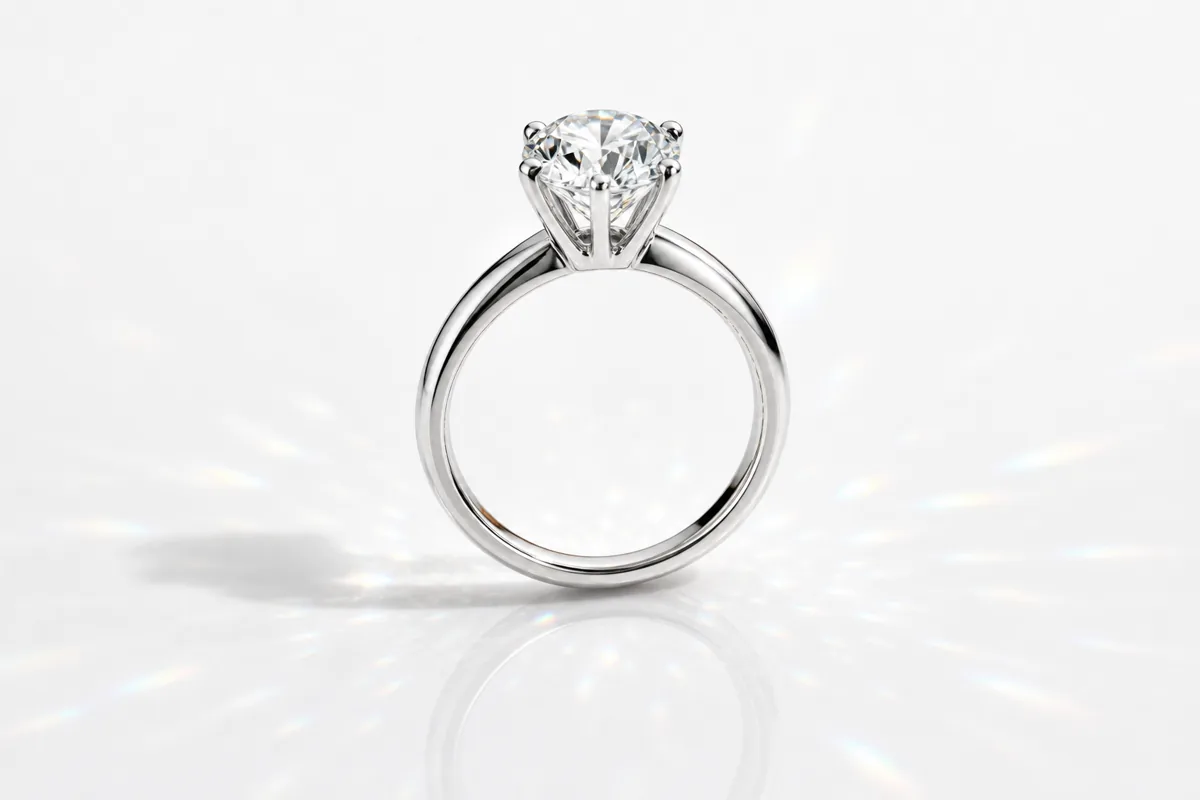
What a diamond valuation covers
A formal valuation documents the ring's metal type and weight, stone carat weight, colour grade, clarity grade, cut assessment, and any unique features. It includes a retail replacement value: what it would cost to replace the item with a comparable piece from a retail jeweller. This number is used by insurers to set coverage limits. It is typically higher than what a seller could realise on the secondary market.
Who can issue a valuation in South Africa
A registered gemmologist (FGA, GG from GIA, or equivalent qualification) can issue a recognised valuation. The valuation should be on letterhead with the gemmologist's credentials, the date, and a clear description of the item. Insurers such as Santam, Discovery, and OUTsurance accept valuations from qualified gemmologists. Update your valuation every three to five years as gold and diamond prices change.
Cost of a valuation in South Africa
Valuation fees in South Africa typically range from R500 to R2,500 for a single ring, depending on complexity, the provider's credentials, and whether laboratory testing is included. Certificates from GIA or IGI are not the same as a valuation but are used as the grading basis within the valuation. If your ring does not have a certificate, the gemmologist must grade the stone independently, which adds time and cost.
Prodiam and diamond assessment in Johannesburg
Prodiam specialises in natural certified diamonds at Suite F1W6, The Paragon, 1 Kramer Road, Bedfordview, Johannesburg. They can assess the diamond component of a ring, provide trade-context pricing for buying or selling purposes, and advise on whether obtaining a formal GIA or IGI certificate before a valuation would strengthen the outcome. Contact Prodiam at Prodiam to discuss your piece before committing to a formal valuation process.
Decision table
Use the details, not a shortcut.
| Valuation purpose | Typical cost range | Who issues it |
|---|---|---|
| Insurance replacement | R500-R2,500 per item | Registered gemmologist |
| Estate or divorce settlement | R800-R3,000 (more complex) | Registered gemmologist, sometimes court-appointed |
| Resale estimate (not a valuation) | Often free from dealers | Diamond dealer or specialist |
| GIA/IGI grading report | R1,500-R4,000 per stone | GIA or IGI laboratory directly |
Direct answers
Common questions
Is a diamond certificate the same as a valuation?
No. A GIA or IGI certificate grades the stone's 4Cs. A valuation assigns a monetary value to the ring for insurance or legal purposes. The certificate is often used as input to the valuation.
How often should I update a diamond ring valuation?
Every three to five years is the common recommendation, or after any significant change in gold prices or diamond market conditions. An outdated valuation can leave you underinsured.
Can Prodiam provide an insurance valuation?
Prodiam can assess the diamond component and provide trade-context advice. A formal insurance valuation must be issued by a registered gemmologist with the appropriate credentials. Contact Prodiam to discuss which route makes sense for your situation.
What happens if I sell a ring for less than its insured value?
Insured value (retail replacement) and resale value are different numbers. Selling below insured value is normal and expected. The insurance value protects you if the ring is lost or stolen, not when you choose to sell.
Do I need a valuation to sell a diamond ring?
Not legally. But having a recent valuation or a GIA/IGI certificate makes the selling process cleaner and supports a better offer from a specialist buyer. An undocumented stone forces the buyer to assess and price conservatively.