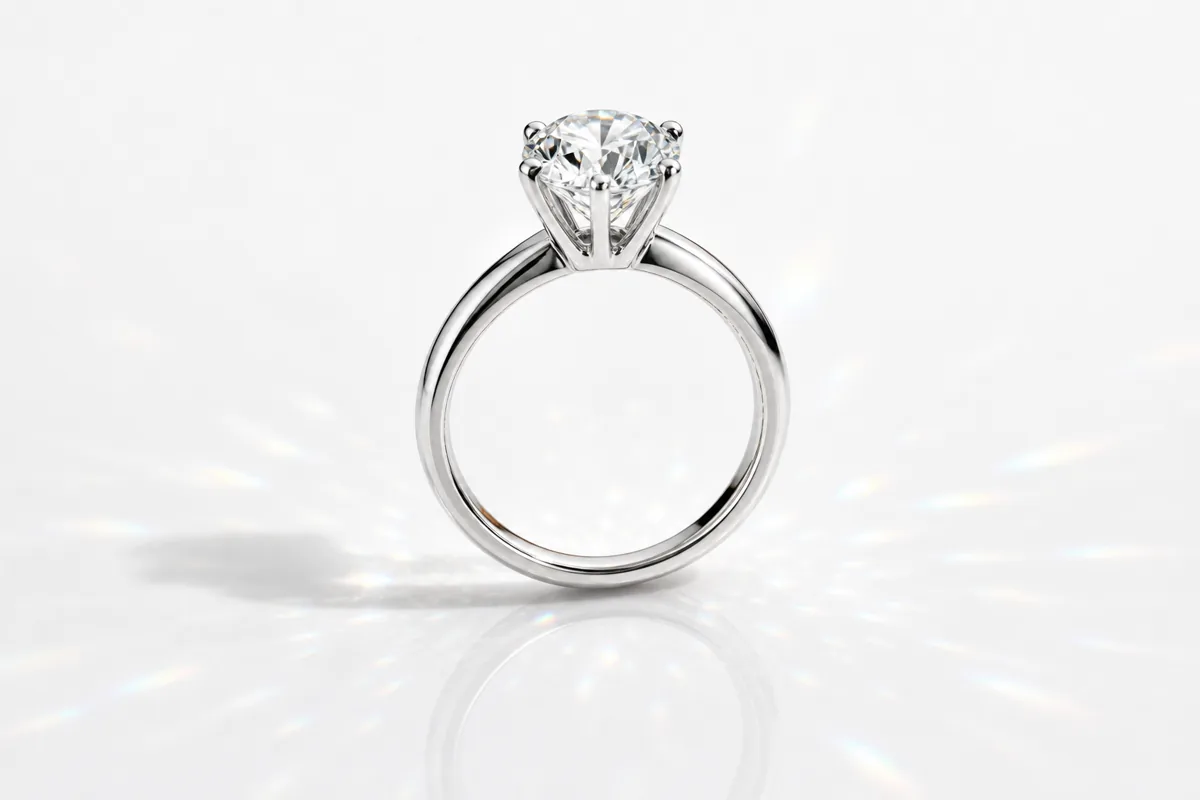
The four stone drivers: cut, colour, clarity, carat
The international diamond market prices stones on the 4Cs. Cut quality determines light return, with an excellent cut commanding a premium over a good cut even at the same carat weight. Colour grades D through F carry the highest premiums for colourless appearance. G through J is where most buyers land for a white look at better value. Clarity grades from FL down to SI affect price significantly, with VS1 to VS2 being the common value band for certified natural diamonds. Carat weight creates price steps at thresholds: 0.50ct, 1.00ct, 1.50ct, and 2.00ct each carry a premium over stones just below those weights.
Why ZAR/USD matters for diamond pricing in SA
The international diamond trade is USD-denominated. Rough diamonds are priced in dollars at tender, polished stones are traded in dollars on the international market, and SA dealers buy inventory in dollar terms. When the rand weakens against the dollar, the rand cost of a stone rises even if the dollar price holds flat. A dealer who bought stock at R17/$ will price differently from one restocking at R19/$. This is not a mark-up decision: it is currency exposure. For buyers, periods of rand strength are objectively better moments to buy a certificated stone in South Africa.
Setting and metal add to the total
The cost of the ring itself sits on top of the stone. A plain 18-carat gold solitaire setting might cost R8,000 to R20,000 for the metalwork alone. A platinum pavé halo setting with accent stones can add R25,000 to R60,000 before the centre stone is included. Total ring price is always stone price plus setting cost plus retail margin. Chain jeweller overhead typically runs higher than a specialist-plus-jeweller arrangement where you source the stone directly and commission a custom setting.
Prodiam valuation route for buyers and sellers
Whether you are buying a certified natural diamond or having an existing ring valued, 4Cs.co.za provides a transparent assessment process. The 48-hour valuation covers the stone's physical characteristics against its certificate and current trade benchmarks. Prodiam is SADPMR-aligned and operates by appointment from Suite F1W6, The Paragon, 1 Kramer Road, Bedfordview, Johannesburg. For pricing discussions before or after purchase, contact Prodiam.
Decision table
Use the details, not a shortcut.
| Stone weight | Typical SA retail range | Key variables |
|---|---|---|
| 0.30-0.49ct | R8,000-R35,000 | Setting style, cut grade, certification |
| 0.50ct | R15,000-R60,000 | Colour/clarity band, metal choice |
| 1.00ct | R30,000-R200,000+ | 4Cs profile, lab cert, exchange rate |
| 1.50ct | R60,000-R350,000+ | Make quality, fluorescence, shape |
| 2.00ct+ | R120,000-R600,000+ | Full 4Cs, liquidity considerations |
Direct answers
Common questions
How much does a 1-carat diamond ring cost in South Africa?
Retail prices for a 1-carat natural diamond ring in SA typically range from R30,000 to R200,000 and above. The variation reflects the 4Cs profile of the stone, the setting type, the metal, whether a grading certificate is included, and whether you are buying from a chain retailer or a specialist dealer.
Why are diamond ring prices in SA different from international prices?
The rand/dollar exchange rate is the main factor. International diamond pricing is USD-denominated. When the rand is weak, SA buyers pay more in rand for the same stone. Duty, dealer margin, and setting cost add further to the final retail price.
What is the cheapest way to buy a diamond ring in South Africa?
Sourcing the certified stone directly through a specialist dealer and commissioning a local jeweller to manufacture the setting typically produces a lower total cost than buying a completed ring from a chain retailer, whose pricing covers franchise overhead and showroom costs. Clarity on the stone documentation protects you at both ends of the transaction.
Does the gold price affect diamond ring prices?
Yes, indirectly. The setting cost moves with the gold price. A heavier platinum or 18-carat gold band costs more in ZAR when metal prices rise. The stone price is governed by the diamond market independently of the gold price.
What is the price difference between natural and lab-grown diamonds in SA?
Lab-grown diamonds typically retail at 80 to 90 percent below comparable natural diamond prices, and that gap is still falling. The trade-off is resale value: lab-grown diamonds have limited secondary market liquidity at present. For investment or heirloom intent, natural certified stones retain more long-term value.
How do I know if a diamond ring price is fair?
Compare the certificate details (cut, colour, clarity, carat, fluorescence, lab) against current Rapaport or Polygon trade data, or ask an independent dealer for a valuation. A price without a grading certificate cannot be reliably assessed. Request the cert before committing.