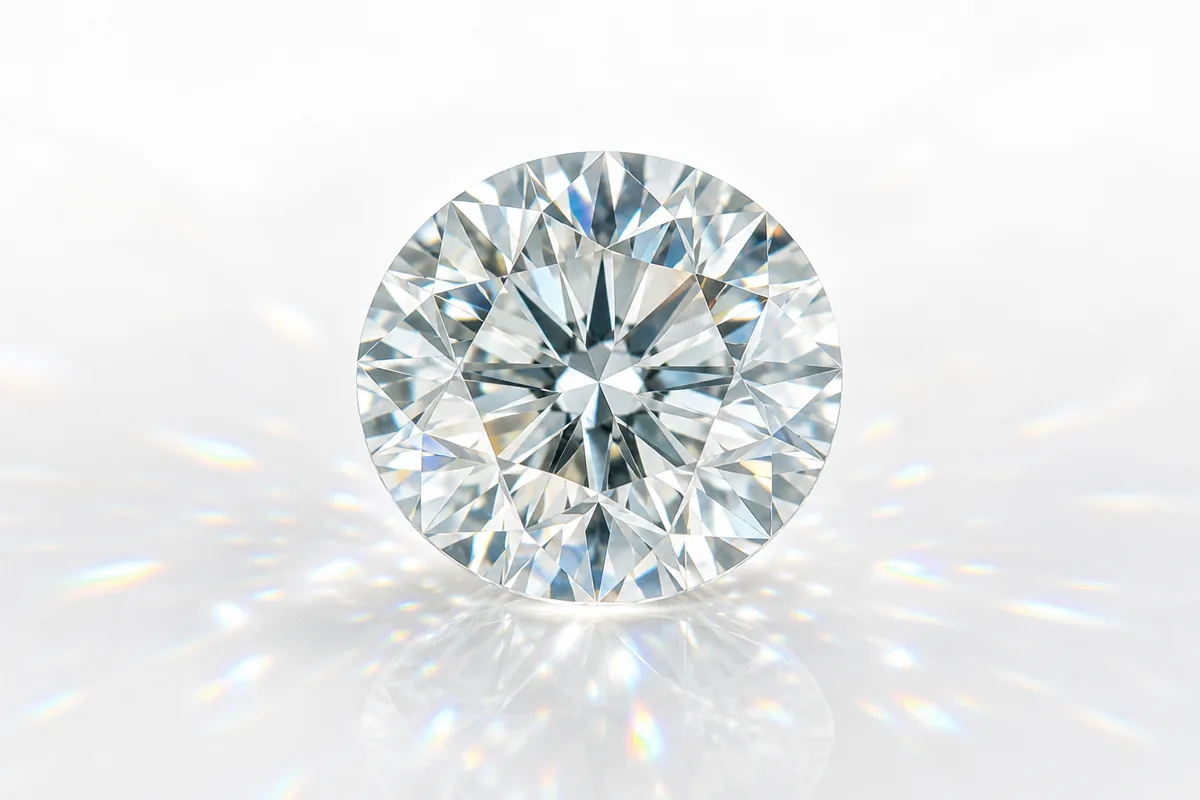
Stone consistency along the strand
A tennis necklace with 40 to 60 stones needs colour consistency across all of them. A deviation of more than two colour grades is visible to the eye, particularly in white metal under daylight. Clarity below I1 in individual stones can create dead spots in the strand. Ask the seller whether stones were graded individually or as a parcel.
Total carat weight versus individual stone quality
Sellers often lead with total carat weight. A 10.00ct necklace with 50 stones at 0.20ct each is not comparable to one with 20 stones at 0.50ct each. Larger individual stones cost more to match in colour and cut. Smaller stones give more sparkle per rand but individual quality is harder to verify.
Clasp security and strand integrity
The clasp must lock reliably and release with deliberate action. Box clasps with safety clips are more secure than simple spring rings. Check that the strand does not flex excessively at individual links, which can indicate thin wire or loose setting heads. A necklace that opens accidentally is a loss event, not a manufacturer defect in most SA insurance claims.
Buying and insuring in South Africa
Short-term insurers require a valuation certificate for specified jewellery items. For a diamond tennis necklace, the certificate should state total carat weight, stone quality range, metal type and purity, and replacement value. Prodiam can inspect pieces and assist with documentation at its Bedfordview office.
Decision table
Use the details, not a shortcut.
| Specification | What to ask | Red flag |
|---|---|---|
| Stone colour | Are all stones the same grade? | No answer or parcel-grade only |
| Clasp type | Box clasp with safety clip? | Spring ring only on a heavy piece |
| Metal purity | 18ct or platinum? | Unstamped or 9ct on fine diamonds |
| Certificate | Valuation or grading report? | No documentation available |
| Total carat weight | Confirmed by weighing or certificate? | Estimated without documentation |
Direct answers
Common questions
What is a diamond tennis necklace?
A tennis necklace is a single strand of individually set diamonds linked together in a flexible line. The name comes from tennis player Chris Evert, who lost a similar bracelet during a 1987 US Open match.
How much does a diamond tennis necklace cost in South Africa?
Entry-level pieces with smaller stones and standard colour grades start in the tens of thousands of rand. High-grade natural diamond tennis necklaces in platinum with consistent colour can reach six figures.
How do I know if the stones are natural diamonds?
A reputable seller will provide documentation. A thermal tester can distinguish diamond from moissanite in-store. For certainty, individual stone grading or a recognised lab appraisal is the definitive test.
Can I insure a diamond tennis necklace in South Africa?
Yes. Specify it as a high-value item on your contents policy. You will need a current valuation certificate, typically dated within three years, and photographs of the piece.
How should I store a diamond tennis necklace?
Store flat in a soft-lined box or pouch. Do not tangle with other jewellery. The strand can kink or prongs can catch on other pieces and loosen.