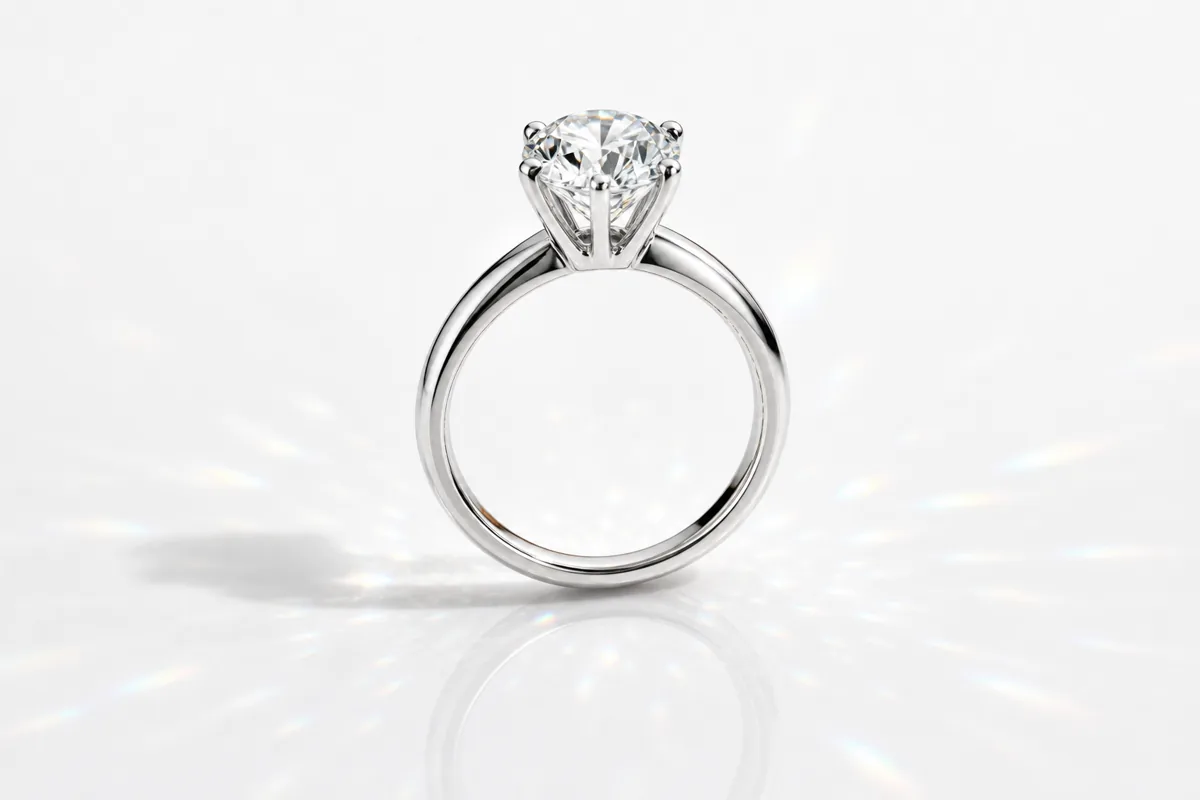
Band styles that suit active daily wear
Eternity bands, channel-set half-eternity bands, and bezel-set styles withstand daily wear better than delicate claw or pavé settings with many small stones. High-profile claw settings snag more easily. For buyers who wear their ring constantly, a lower-profile setting reduces long-term maintenance.
Natural diamond quality in a wedding band
For a band set with multiple smaller diamonds, colour and clarity consistency across all stones matters as much as the individual grades. Mismatched colour between stones is visible in a finished band and reduces the overall quality appearance even if each stone is within an acceptable grade range individually.
Metal choice and longevity
Platinum is durable and maintains white colour without rhodium replating. White gold is less expensive but will need replating over time to maintain its white finish. Yellow gold and rose gold are back in demand for diamond wedding bands in SA. Metal choice affects maintenance cost, not just appearance.
Certification and resale
A diamond wedding ring with certified stones carries a clearer resale and insurance value than one without documentation. Prodiam in Bedfordview handles certified natural diamonds and can assess ring and loose stone value for women wanting to upgrade or transact their diamond wedding jewellery.
Decision table
Use the details, not a shortcut.
| Setting style | Durability for daily wear | Maintenance note |
|---|---|---|
| Bezel set | High | Full metal wrap protects stones |
| Channel set | High | Stones flush with metal |
| Half-eternity claw | Medium | Prongs need periodic inspection |
| Pavé | Lower | Small prongs, more maintenance |
| Full eternity | Medium | Sizing adjustments are limited |
Direct answers
Common questions
What is the difference between an engagement ring and a wedding ring?
An engagement ring is typically given at proposal and worn on the left ring finger. A wedding ring is exchanged at the ceremony. Many women stack both. The two rings are often matched in metal and style.
How much should a diamond wedding ring cost in South Africa?
Price varies by carat weight, stone quality, metal, and dealer margin. There is no standard. Compare certified options at the same grade specification rather than comparing visual appearance alone.
Can I resize a diamond eternity band?
Full eternity bands are difficult to resize because stones run all the way around. Half-eternity bands can usually be resized by one or two sizes. Confirm resize options before purchase if your ring size may change.
Is platinum or white gold better for diamond wedding rings?
Platinum is denser, more durable, and does not need replating. White gold is lighter and less expensive but requires rhodium plating every few years to maintain colour. Both are good choices depending on budget and maintenance preference.
Should the wedding band match the engagement ring metal?
Matching metals is traditional. Mixed metal stacking is increasingly common. If stacking, consider whether the metals will wear evenly against each other over time.
How do I know if the diamonds in a band are natural?
Ask for a certificate from a recognised lab such as GIA or IGI. For small pavé or channel stones, a general grading report for the piece may be provided rather than individual stone certificates.