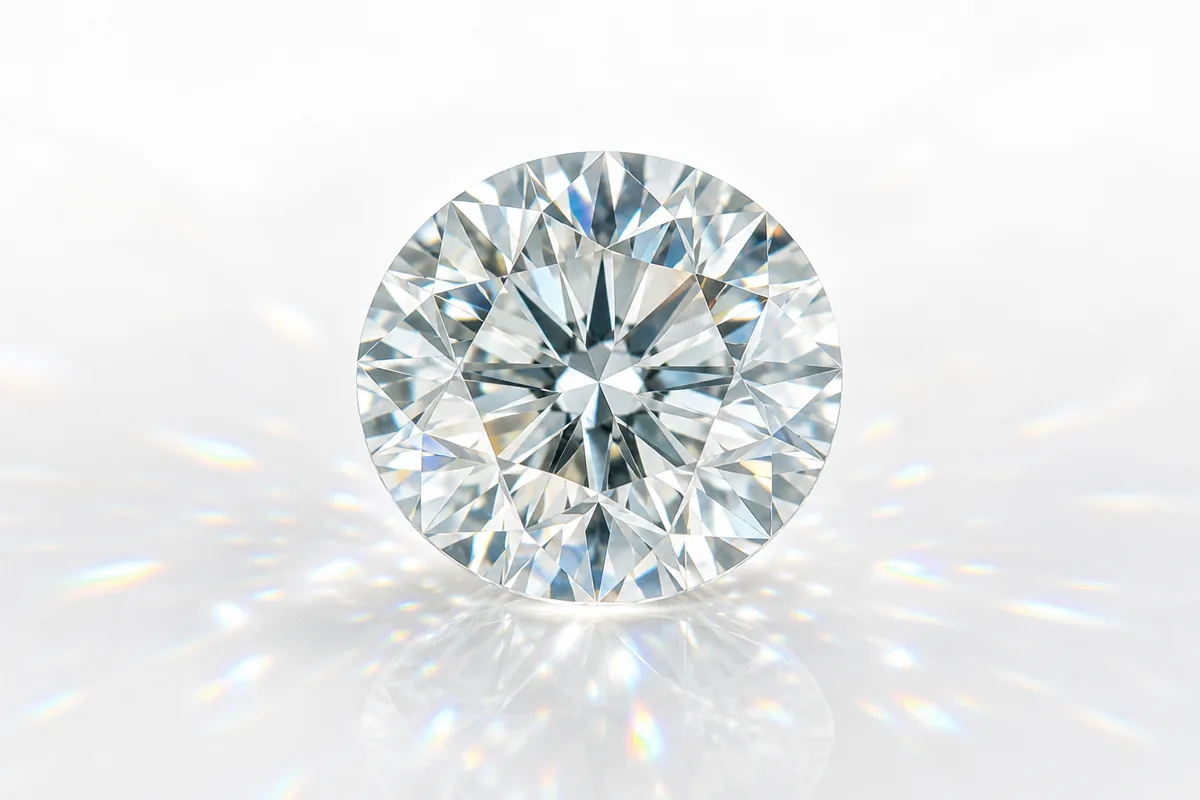
What step-cut means for appearance
Step cuts, including emerald and Asscher, use long flat facets arranged in parallel steps rather than triangular brilliant facets. The effect is a calm, reflective look rather than intense sparkle. Under light, the stone shows broad flashes of reflection and deep visual depth. In shadow, it can look comparatively quiet.
Colour sensitivity
Because the large open table of an emerald cut lets the eye see into the stone without distraction, body colour is more visible than in round or oval brilliants. A buyer who goes to J colour in a round might find the same J noticeably warm in an emerald cut. A safe starting point for emerald cuts in white metal is H or above.
Clarity sensitivity
Inclusions are also more visible in step cuts. A VS2 grade that passes easily in a round can show a distinct dark inclusion in an emerald cut at certain angles. VS1 or better is a conservative starting point. SI grades require in-person inspection of the actual stone, not just the certificate.
Length-to-width ratio
Emerald cut diamonds range from nearly square at 1.0 to elongated at 1.6. The most common preference range is 1.30 to 1.50. A ratio below 1.20 gives an Asscher-like appearance. Above 1.60, the stone can look narrow in a standard solitaire setting. Ratio is a personal choice but should be considered alongside finger length and ring width.
Decision table
Use the details, not a shortcut.
| Factor | Round brilliant benchmark | Emerald cut behaviour |
|---|---|---|
| Colour visibility | Moderate | High, use H or better in white metal |
| Clarity visibility | Moderate | High, VS1 or better recommended |
| Sparkle type | Intense, scintillating | Calm, hall-of-mirrors flash |
| Resale demand in SA | Highest | Strong, established market |
| Common length-to-width ratio | Not applicable | 1.30 to 1.50 preferred |
Direct answers
Common questions
Why is it called an emerald cut if it is a diamond?
The cut was developed to suit the properties of emeralds, which chip more easily than diamonds. The cropped corners and step facets reduce stress on the edges. The cut was later adopted for diamonds and the name stayed.
What colour grade should I choose for an emerald cut diamond?
H or above in white metal is a practical starting point. In yellow gold, you can go slightly lower, such as I or J, without visible warmth looking out of place.
Is an emerald cut diamond cheaper than a round?
Yes, generally. Emerald cuts often sell at a lower price per carat than rounds because less rough is wasted in cutting and because brilliant cuts have higher market demand. The difference can be 10 to 25% depending on grade and size.
Does an emerald cut diamond show inclusions more clearly?
Yes. Step facets act like windows. VS1 or better is a safe starting point. SI grades should be assessed on the actual stone before purchase.
What setting suits an emerald cut diamond?
A four-prong setting at the four cropped corners is standard. Bezel settings fully protect the edge but change the look. A plain solitaire on a thin band is the classic pairing.
Can Prodiam source an emerald cut diamond?
Prodiam handles certified natural diamonds including emerald cuts. Contact a qualified specialist or call a qualified specialist to discuss specifications and pricing.