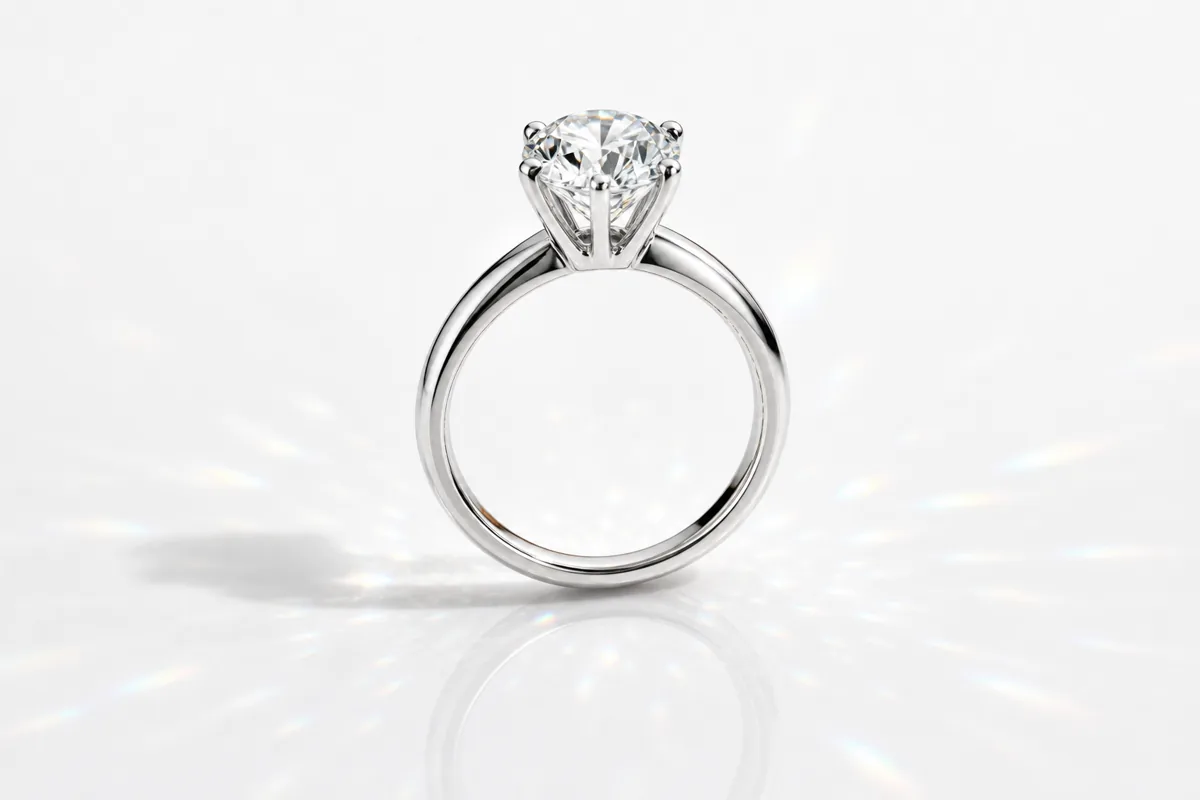
Solitaire and halo
A solitaire is the most popular engagement ring style globally and in SA. It features a single stone in a four or six-prong setting on a plain band. The style demands quality across all 4Cs because nothing distracts from the centre stone. Colour, cut, and clarity are all visible. A halo surrounds the centre stone with a circuit of smaller diamonds. The halo creates the visual impression of a larger centre stone and can allow a buyer to step down in carat weight while maintaining face-up size. Cut quality in the centre stone still matters.
Three-stone, vintage, and pavé
A three-stone or trilogy ring features a centre stone flanked by two side stones, traditionally representing past, present, and future. The side-stone shapes need to complement the centre cut. Vintage styles draw on Edwardian, Art Deco, and Victorian design language, often with milgrain edging and filigree detail. They suit buyers who want character over minimalism. Pavé settings embed small diamonds into the band itself, adding a large international online retailer along the full circumference. Pavé increases the ring's overall light return but adds maintenance complexity, as small stones can loosen over time.
Bezel, tension, and cluster
A bezel setting encircles the stone in a collar of metal rather than using prongs. It offers strong protection, suits active lifestyles, and gives a clean modern look. The bezel setting tends to make a stone look slightly smaller face-up than a prong setting of equal carat weight. A tension setting holds the stone between two metal arms using pressure. It showcases the stone from all angles but requires precision manufacturing and is not universally resizable. A cluster setting groups multiple smaller stones to create the impression of a single larger stone. Useful for buyers who want impact at lower per-stone carat weights.
Matching style to the 4Cs and visiting Prodiam
Solitaires reward high cut, colour, and clarity because every grade is visible. Halos can work with a slightly lower colour centre stone because the surrounding melee creates a bright frame. Bezel and cluster settings can accommodate mid-range clarity more forgivingly because the metal or surrounding stones draw the eye. Vintage settings often suit warmer colour grades and cushion or oval cuts. Before committing to a style, view the stone in the setting, not on a paper specification. Prodiam at Suite F1W6, The Paragon, 1 Kramer Road, Bedfordview works by appointment and can advise on pairing a specific stone's 4Cs profile to the right setting.
Decision table
Use the details, not a shortcut.
| Style | 4C priority | Best suited stone shapes | Maintenance level |
|---|---|---|---|
| Solitaire | Cut, colour, and clarity all visible | Round, oval, cushion, emerald | Low |
| Halo | Cut and colour in centre stone | Round, cushion, pear, oval | Moderate |
| Three-stone | Cut match across all three stones | Round, princess, pear combinations | Moderate |
| Vintage | Character over precision; clarity less scrutinised | Cushion, oval, rose cut | Moderate |
| Bezel | Cut and carat; colour less exposed | Round, oval, emerald | Low |
| Tension | Cut and proportions critical; precision fit | Round, princess | High |
| Pavé | Overall cut quality across band stones | Any centre cut | High |
| Cluster | Colour matching across stones | Round melee combinations | Moderate |
Direct answers
Common questions
Which engagement ring style is most popular in South Africa?
The solitaire remains the most widely chosen style, followed by halo settings. Both suit a wide range of budgets and stone shapes and photograph clearly.
Does setting style affect how big the diamond looks?
Yes. Halo settings make the centre stone look larger by surrounding it with melee diamonds. Bezel settings tend to reduce the visual spread of a stone slightly. Well-cut solitaires often look larger face-up than their carat weight suggests because light return maximises apparent size.
Can I change the setting style after purchase?
In most cases, yes. A certified natural diamond can be reset into a different setting, provided the stone's dimensions fit the new design. Resetting costs vary by complexity. Discuss this with the jeweller before the original purchase.
Which style is most practical for everyday wear?
Bezel settings offer the strongest protection for daily wear because the metal collar shields the stone's edge. Solitaire prong settings are common but require periodic prong inspection to confirm the stone is secure.
Does pavé add significantly to the ring's cost?
Yes. Pavé requires additional stones and precision setting labour. The ongoing maintenance cost is also higher because small stones can loosen. Budget for at least one professional inspection per year for pavé rings worn daily.
Which engagement ring styles suit larger stones above 1.5ct?
Solitaires and three-stone settings are frequently chosen for larger stones because they give the stone maximum visual presence. Halo settings can visually overwhelm very large centres. For stones above 1.5ct, cut quality and proportions matter most.