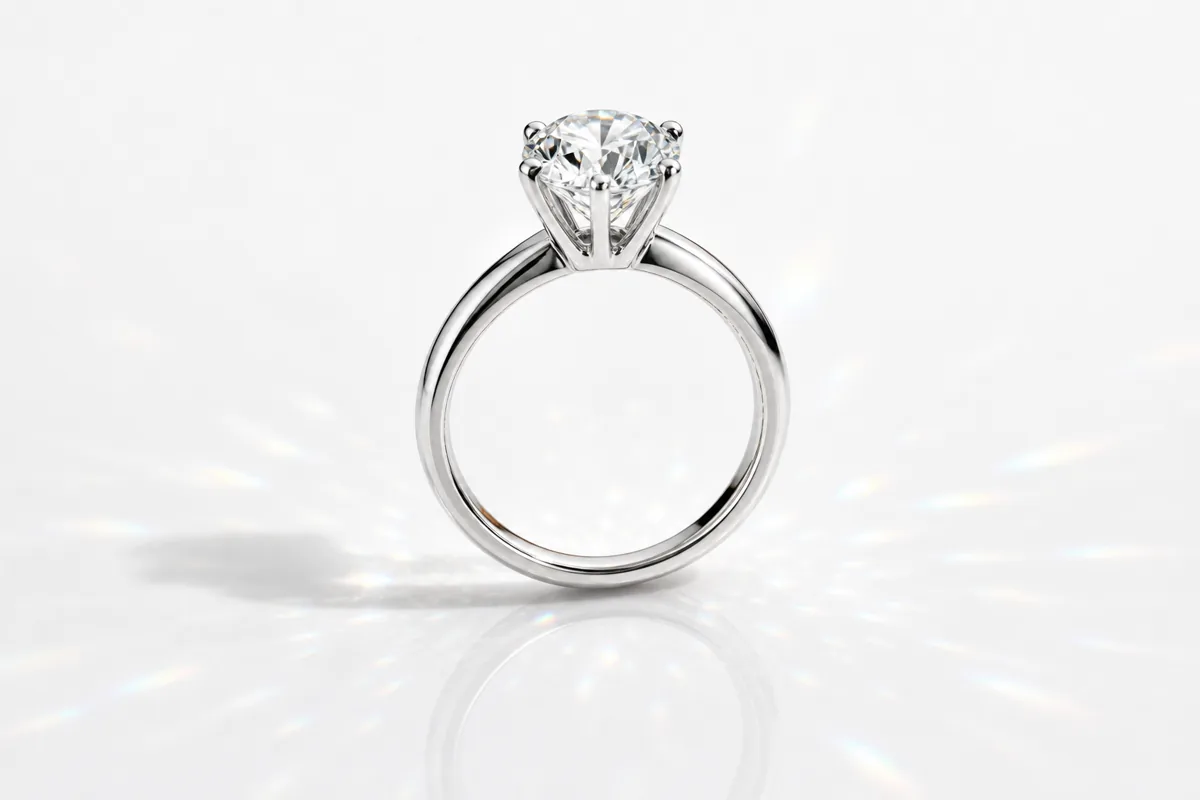
The engagement ring
An engagement ring marks the proposal. It is typically a single prominent stone, most often a diamond, set in a design that draws attention to the centre gem. In SA and most British-tradition countries, it is placed on the left-hand fourth finger at the time of the proposal. The buyer is usually the proposing partner. The design priority is impact: the ring needs to communicate the significance of the moment. Certified natural diamonds are the standard for this ring because the certificate establishes an objective value that follows the stone through resale or insurance.
The wedding band
A wedding band, often called a wedding ring, is exchanged at the ceremony itself between both partners. Unlike the engagement ring, the wedding band is usually a plain or lightly decorated band of metal, gold, platinum, or palladium being the most common in SA. Both partners wear one. The wedding band sits on the same finger as the engagement ring and traditionally goes closest to the hand, beneath the engagement ring, to symbolise proximity to the heart. Cost per band is typically lower than the engagement ring, but matching bands for two people is a combined expense to budget for separately.
The eternity ring
An eternity ring, also called an eternity band, features a continuous circuit of matched stones, usually diamonds, running around the full band. It is not exchanged at the proposal or the ceremony. It is typically given as a gift at a milestone: a first anniversary, a significant birthday, or the birth of a child. An eternity ring sits on the same finger as the wedding band and engagement ring, creating a stack. Full eternity bands cannot be resized because the stones run around the full circumference. Half eternity bands, where stones cover only the top portion, can be resized and are more practical for long-term wear.
Buying guide for each ring type
Budget each ring separately. The engagement ring typically carries the largest spend because its centre stone drives the value. The wedding band is a per-partner spend, often R5,000 to R20,000 each depending on metal and any stone detailing. The eternity ring is discretionary and bought later. For the engagement ring, Prodiam at Suite F1W6, The Paragon, 1 Kramer Road, Bedfordview handles certified natural diamond sourcing by appointment. Contact Prodiam. For plain metal wedding bands, most jewellers and specialist ring makers can accommodate.
Decision table
Use the details, not a shortcut.
| Ring type | When given | Who wears it | Typical design |
|---|---|---|---|
| Engagement ring | At the proposal | Proposing partner's choice; worn by recipient | Centre stone, often solitaire or halo |
| Wedding band | At the ceremony | Both partners | Plain or lightly set metal band |
| Eternity ring | Anniversary or milestone gift | One or both partners | Full or half circuit of matched stones |
| Promise ring | Pre-engagement commitment | One or both partners | Simpler band, sometimes with small stone |
| Dress ring | Self-purchase or gift, any occasion | Any | Decorative; no formal commitment meaning |
Direct answers
Common questions
Do you need both an engagement ring and a wedding ring?
No. The two rings serve different moments but neither is legally required. Some couples skip the engagement ring and invest the full budget in a more significant wedding band. Others wear only the engagement ring after the ceremony. The convention is cultural, not obligatory.
Which ring goes on first when stacking both?
Traditional convention places the wedding band closest to the heart, meaning it sits below the engagement ring on the finger. Many brides achieve this by temporarily moving the engagement ring to the right hand during the ceremony, placing the wedding band first, then returning the engagement ring on top.
Can an eternity ring be resized?
A full eternity band, where stones run the full circumference, cannot be resized without disturbing the stone circuit. A half eternity band, with stones on the top half only, can usually be resized. Confirm before purchasing.
Is an engagement ring tax-deductible in SA?
No. Personal jewellery purchases are not deductible under South African tax law. The ring is treated as a personal asset for income tax purposes and is subject to capital gains tax only on disposal if it has appreciated in value.
What metal should the wedding band be made from?
Platinum is the most durable and hypoallergenic choice. 18k gold is the most popular option in SA, available in yellow, white, or rose. 9k gold is harder but lower purity. Palladium is a lower-cost alternative to platinum with similar properties.
Should the wedding band match the engagement ring?
Not necessarily. Many couples choose complementary metals or designs rather than exact matches. If the engagement ring has a specific profile, the wedding band should sit flush against it without creating a gap. A jeweller can advise on profile compatibility before ordering.