What a how to tell if a diamond is real can and cannot prove
A laboratory report describes one specific stone on the day it was graded: its identity, measurements, and quality profile. It cannot prove that the diamond in front of you is that stone, that the stone is undamaged since grading, or that the seller's price is fair. Treat the how to tell if a diamond is real as the first half of the job. Matching the paper to the physical diamond is the second half, and it is the half where problems hide.
How to actually verify a report, step by step
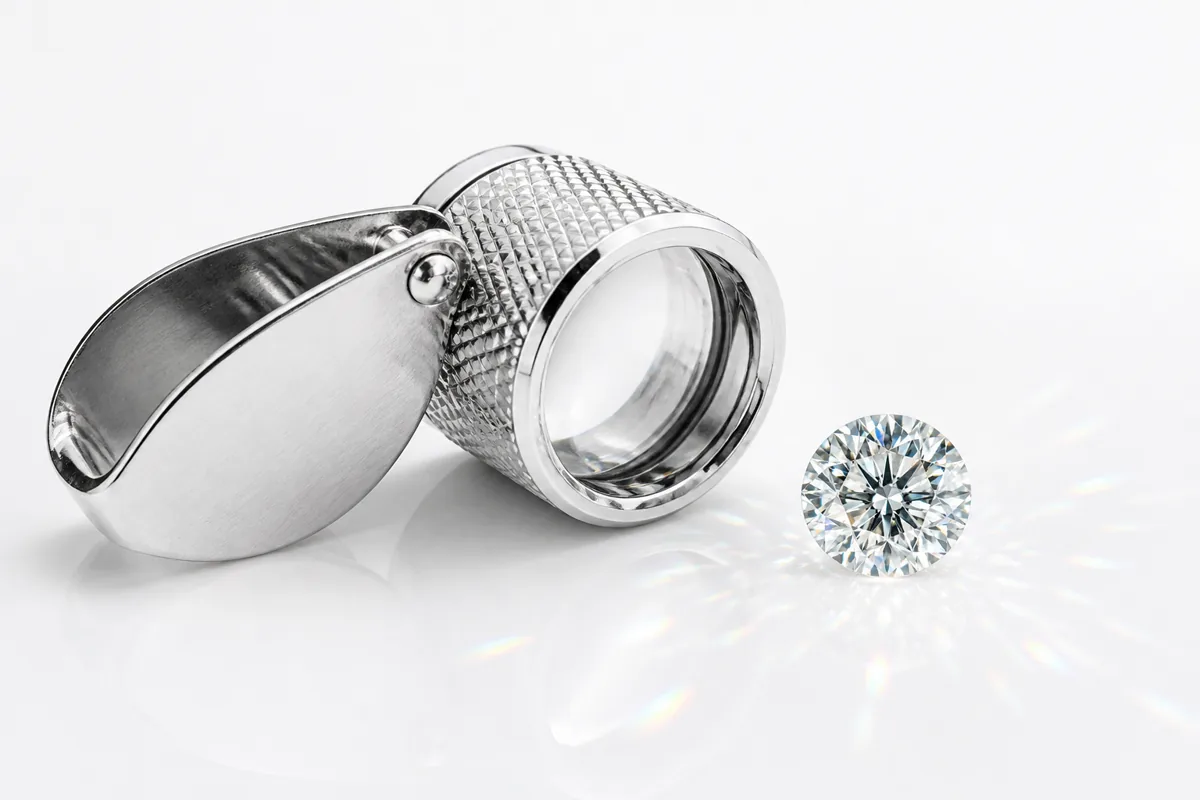
Start with the report number: GIA reports can be checked against the lab's own online Report Check, which shows the original grading details. Then match the physical evidence. Most GIA-graded stones above half a carat carry a laser inscription on the girdle that needs a 10x loupe and patience to find. Compare the measurements on the paper to the stone to a hundredth of a millimetre; a mounted stone makes this harder, which is why serious checks happen with the stone loose or with the seller's cooperation. Read the clarity plot like a fingerprint: the mapped inclusions should exist in the stone, in the mapped positions. Finally, read the comments field. Phrases about clarity enhancement, laser drilling, or surface treatments change the conversation entirely, and they are easy to skim past.
Where certificate trouble actually starts
Most certificate problems are not forged papers. They are honest-looking mismatches: a report borrowed from a similar stone, a stone chipped or repolished after grading so the weight no longer matches, a shop "appraisal certificate" presented as if it were an independent lab report, or a different laboratory's generous letter grades read as if they were GIA grades. The same letter does not mean the same standard across labs. When paper and stone disagree, the stone is the truth and the price should follow the stone.
When Prodiam is the right next step
Use the checklist to inspect the stone by appointment. 4Cs.co.za is published by 4Cs.co.za: the education is free, the disclosure is permanent, and the specialist conversation is there when a real stone needs one. Bring the certificate or report number, photos in plain light, and any invoices or valuations, and the conversation starts from evidence instead of guesswork.
Decision table
Use the details, not a shortcut.
| Check | Strong sign | Walk-away sign |
|---|---|---|
| Report number | Verifies on the lab's own database | Cannot be checked, or details differ |
| Inscription | Girdle inscription matches the report | No inscription where one is listed |
| Measurements | Match to 0.01 to 0.02 mm | Rounded, missing, or clearly different |
| Plot | Mapped inclusions found in the stone | Clean plot, included stone |
| Comments | Read and understood before any offer | Treatment notes ignored or unexplained |
Direct answers
Common questions
Is a how to tell if a diamond is real the same as a valuation?
No. A lab report describes identity and quality. A valuation puts a money figure on it for a specific purpose, such as insurance replacement or resale, and those figures differ by purpose.
Do all labs grade to the same standard?
No. The same letter grade can describe different stones at different laboratories. GIA is the most consistent global reference, which is why serious buyers and sellers anchor on it.
My diamond has no certificate. Is it worthless?
No. An uncertified diamond still has its actual quality; it just has not been independently described. Grading it adds common language, which usually pays for itself on a meaningful stone.
Can a certificate be faked?
Outright forgeries exist but are rarer than mismatches: a real report paired with a different or altered stone. That is why matching, not just reading, is the core skill.