The bow-tie effect and why it matters
Almost all oval diamonds show a bow-tie, a dark area across the centre of the stone that resembles a bow-tie in silhouette. A faint, symmetrical bow-tie is normal and often considered attractive. A strong, dark bow-tie reduces the stone's a large international online retailer and should be avoided. Certificates do not grade bow-tie severity. You must see the stone in person, or in high-quality video, to assess it.
Cut quality without a cut grade
GIA does not assign an overall cut grade to oval diamonds the way it does for round brilliants. Instead, the report gives polish and symmetry grades. A well-cut oval typically has a length-to-width ratio between 1.30 and 1.50, a table percentage around 53-63%, and a depth percentage around 58-62%. Outside these ranges, the stone may look too narrow, too round, or carry weight in the depth rather than the face.
Setting styles for oval engagement rings
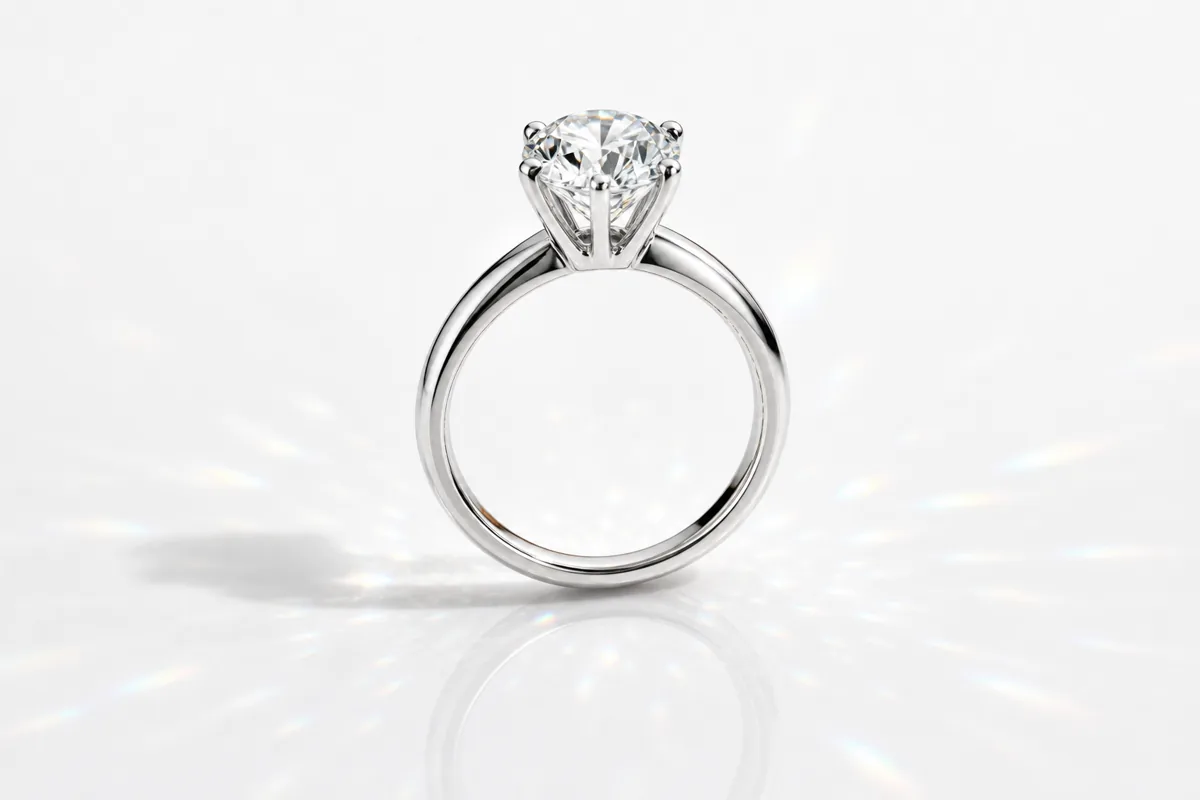
The most popular settings for oval diamonds are thin pavé bands that allow the stone's elongated shape to dominate. Halo settings add visual size but can date faster than solitaire styles. East-west settings, where the oval runs horizontal, are a strong contemporary alternative. A bezel setting protects the pointed tips of the oval if durability is a priority.
Colour and clarity recommendations for oval diamonds
Ovals show colour slightly more than round brilliants due to their outline and facet pattern. A buyer who would choose H in a round brilliant may prefer G or even F in an oval if the ring is set in platinum or white gold. Step-facet ovals are rarer but show clarity inclusions more clearly than standard brilliant-cut ovals. For clarity, VS2 or better is a safe starting point for an oval in a white metal setting. Prodiam in Bedfordview handles certified natural diamonds and can show buyers oval stone options with a direct assessment of bow-tie and cut quality before purchase.
Decision table
Use the details, not a shortcut.
| Specification | Recommended range | Outside this range |
|---|---|---|
| Length-to-width ratio | 1.30 to 1.50 | Too round or too narrow |
| Table percentage | 53-63% | Affects light return |
| Depth percentage | 58-62% | Weight hidden in depth |
| Colour (white gold/platinum) | F-H | H+ may show warmth |
| Clarity | VS2 and above | SI needs in-person inspection |
| Bow-tie | Faint and symmetrical | Strong bow-tie reduces value |
Direct answers
Common questions
Are oval diamonds cheaper than round brilliants?
Oval diamonds typically cost less per carat than round brilliants of the same colour and clarity grade. This is partly because oval cutting retains more of the rough diamond and partly because round brilliants carry a premium due to their dominant market position.
What length-to-width ratio should I choose for an oval engagement ring?
A ratio between 1.35 and 1.50 suits most fingers and is the most popular range. Ratios below 1.30 look almost round. Ratios above 1.55 look very narrow. Personal preference is the final judge.
Can you see a bow-tie in photos?
A bow-tie is most visible in certain lighting conditions and may not be apparent in studio photographs. Video in natural light or office-style lighting shows bow-tie severity more reliably than catalogue images.
What metal suits an oval diamond engagement ring?
Platinum and white gold show off the oval's shape clearly. Yellow gold and rose gold add warmth and suit oval diamonds in the G-I colour range. Metal choice should complement the stone's colour grade.
How do I know if the oval cut is good quality?
Check the length-to-width ratio, table, and depth percentages on the certificate. Then look at the stone in person or in honest unedited video for bow-tie severity and overall face-up appearance. Both steps are necessary.
Is an oval diamond a good long-term choice?
Oval has consistently been among the most traded fancy shapes over multiple decades. It is not a short-lived trend. Certified oval naturals in recognised grades have a track record of retaining demand in the secondary market.