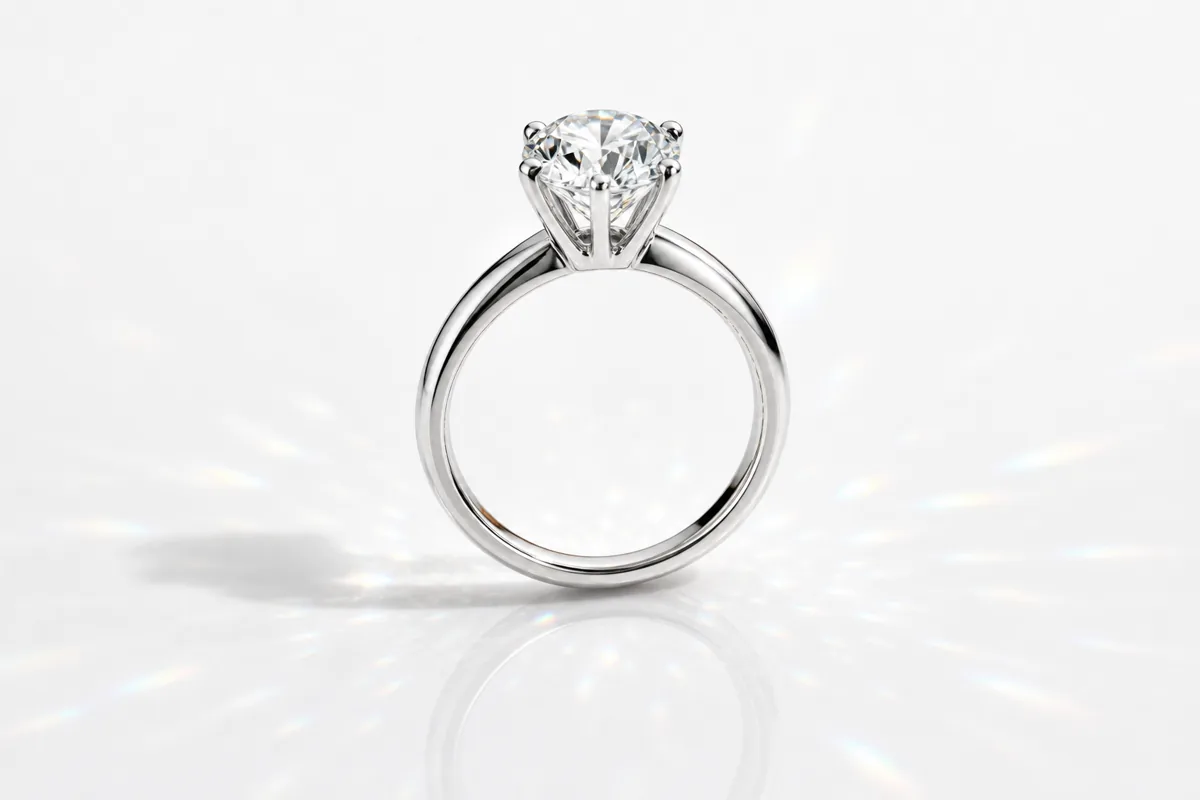
Density and feel
Platinum is approximately 60% heavier than gold at the same volume. A platinum ring feels noticeably denser on the finger. It is also 95% pure platinum (950 hallmark), versus white gold which is typically 75% gold (18k) with alloys. This density means platinum settings hold prongs more securely over decades of wear.
Maintenance differences
White gold is rhodium-plated. The plate wears in two to three years and needs renewal at R300-R700 per service. Platinum develops a natural patina from surface micro-scratches but does not change colour. Many owners value the patina. If you want a mirror finish, polishing restores it at a jeweller.
Price comparison
Platinum is significantly more expensive than 18k white gold. The raw metal cost is higher and it is harder to work, so labour is also higher. In the SA market, a comparable platinum ring can run 30-50% more than its 18k white gold equivalent before considering stone cost.
Which suits a natural diamond better
Both metals show a colourless diamond cleanly. Platinum's slight grey tone can make very fine D-F diamonds appear crisper. For G-J stones, the difference is minimal. Prodiam can advise which certified stones pair well with each metal type and what the setting options look like.
Decision table
Use the details, not a shortcut.
| Factor | Platinum | 18k white gold |
|---|---|---|
| Purity | 95% platinum (950) | 75% gold (18k) |
| Weight | Heavier (denser metal) | Lighter |
| Maintenance | Patina over time, polish if wanted | Rhodium replating every 2-3 years |
| Price premium | 30-50% more than white gold | Reference point |
| Prong durability | Excellent long-term hold | Very good with proper prong checks |
Direct answers
Common questions
Does platinum tarnish?
No. Platinum develops a surface patina from micro-scratches, which gives it a subtle satin look. The metal does not corrode or tarnish.
Is platinum hypoallergenic?
Yes. Platinum 950 is well-tolerated by people with nickel allergies. White gold alloyed with nickel can cause reactions in sensitive skin. Palladium-alloyed white gold is a middle option.
Can you resize a platinum ring?
Yes, but it requires a jeweller experienced with platinum. It is harder to solder and resize than gold, so labour costs more.
Which holds a diamond more securely long-term?
Platinum prongs resist metal fatigue longer than gold prongs. For a stone you plan to wear daily for decades, platinum prong settings have a durability advantage.
Is platinum a better investment than white gold?
Neither is a reliable financial investment on its own. The diamond in the ring is the primary value driver. The metal is a setting cost.