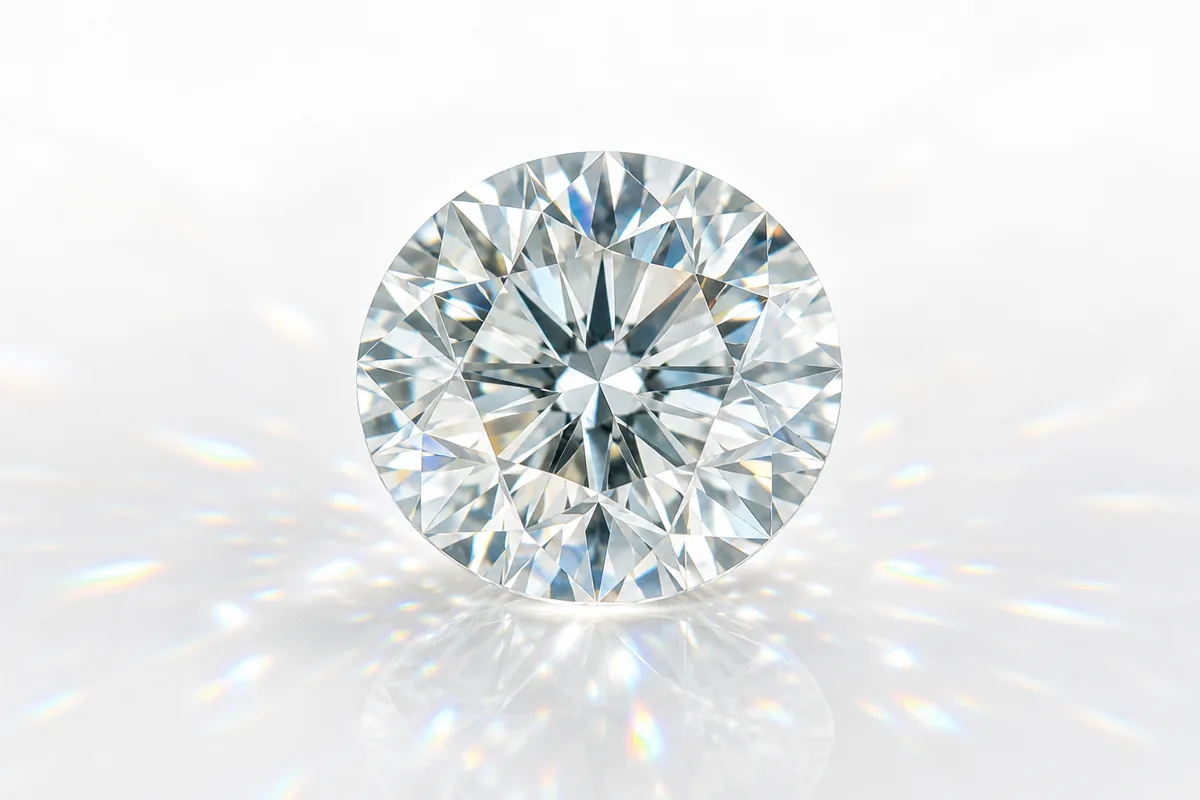
What makes a radiant cut distinct
The radiant cut was developed in the 1970s by Henry Grossbard and is one of the first rectangular shapes to use a full brilliant-cut facet pattern beneath its outline. Unlike the emerald cut, which uses step facets that act like mirrors, the radiant uses triangular and kite-shaped facets that scatter light. This creates more sparkle and makes inclusions less visible at similar clarity grades.
Proportions and length-to-width ratios
Radiant cuts come in square (length-to-width ratio near 1.00) and elongated (1.20 to 1.40 or beyond) formats. The preferred ratio is personal, but elongated radiants tend to look larger on the finger and can flatter a wider variety of hand shapes. Unlike round brilliants, there is no single ideal proportion target for radiant cuts, so assess the stone visually alongside certificate data.
Colour and clarity in radiant cuts
Radiant cuts are more forgiving of inclusions than emerald cuts but show colour more readily than round brilliants. The corners are cropped, which reduces the risk of chipping. For colour, staying in the G-I range is a reasonable starting point in white metal settings. For clarity, VS1 through SI1 with eye-clean inspection covers most buyers' requirements.
Buying a radiant cut in South Africa
Radiant cuts are less common in standard retail than round brilliants or oval cuts, so sourcing a specific stone often requires a specialist. Prodiam in Bedfordview, Johannesburg, handles certified natural diamonds and can assist with sourcing or assessing a specific radiant cut stone. Contact a qualified specialist or call a qualified specialist.
Decision table
Use the details, not a shortcut.
| Feature | Radiant cut | Emerald cut | Princess cut |
|---|---|---|---|
| Facet type | Brilliant | Step | Modified brilliant |
| Outline | Rectangle or square with cropped corners | Rectangle with cropped corners | Square with sharp corners |
| Inclusion visibility | Moderate | High | Moderate |
| Colour visibility | Moderate to high | High | Moderate |
| Sparkle level | High | Lower, hall-of-mirrors effect | High |
Direct answers
Common questions
Is a radiant cut the same as a princess cut?
No. Both are square or rectangular, but a princess has sharper corners and a different facet layout. A radiant has cropped corners and is closer in a large international online retailer behaviour to an oval or cushion.
What colour grade should I choose for a radiant cut?
G, H, or I is a practical range in white gold or platinum settings. Yellow gold settings can accommodate warmer grades without the colour being obvious.
Are radiant cut diamonds more expensive than round?
Round brilliants typically cost more per carat because demand and rough-yield losses are highest. Radiant cuts can offer more carat for the budget in some cases.
Do radiant cuts chip easily?
The cropped corners reduce chipping risk compared to princess cuts with sharp corners. Radiant cuts are a practical choice for daily wear settings.
Where can I find a radiant cut diamond in Johannesburg?
Prodiam in Bedfordview can source or assess certified radiant cut diamonds. Reach them at Prodiam.