Alloy composition and colour depth
The more copper in the alloy, the deeper the rose or red tone. Rose gold does not tarnish in the same way as silver, but the copper content can cause skin reactions in some people with metal sensitivities. 18ct rose gold has less copper and a subtler pink tone than 9ct rose gold. Always check the hallmark if colour intensity matters.
Which diamond colours work best
Rose gold tends to show body colour in diamonds. A D-F colourless stone against rose gold can look cold or mismatched in some settings. G-K range diamonds often look intentional and warm against rose gold. Fancy yellow diamonds pair well. The setting metal can balance or clash with diamond colour, so inspect the combination in person before buying.
Setting styles in rose gold
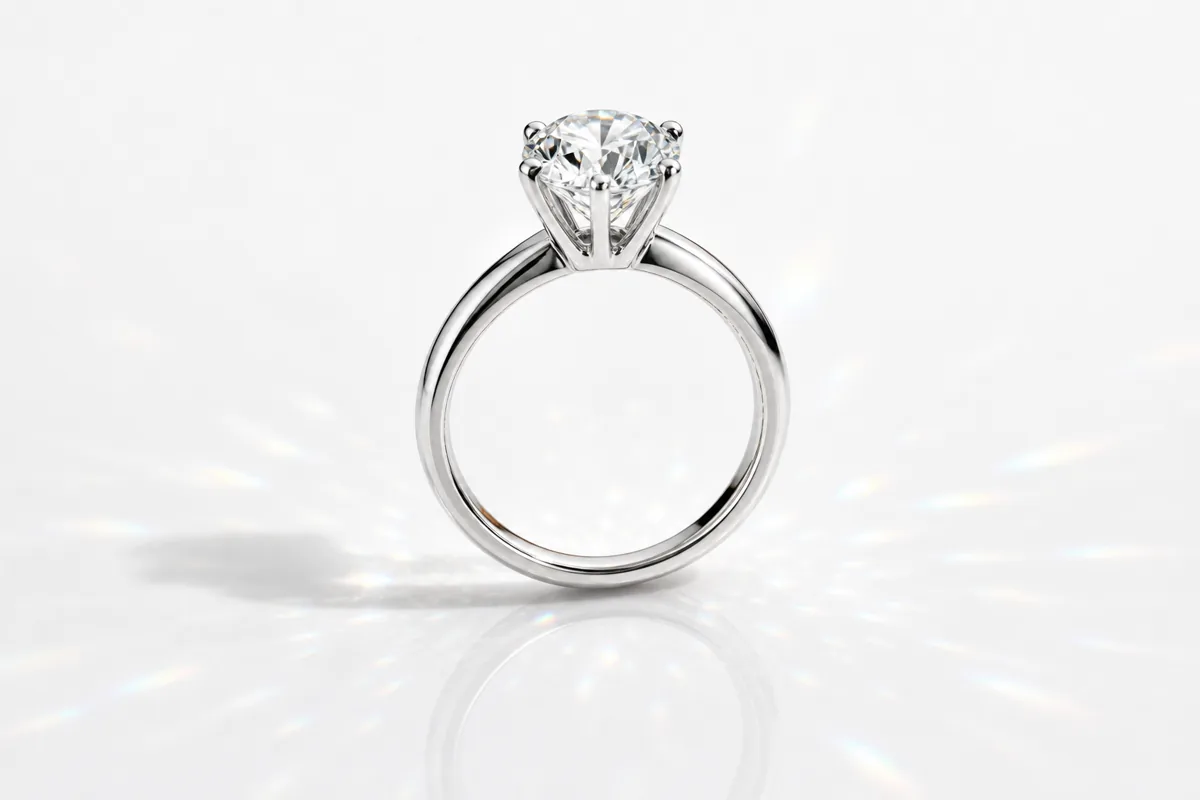
Solitaire settings in rose gold with a round or oval brilliant are popular. Halo settings add visible diamond presence around a centre stone. Pavé or channel bands on rose gold have become common in SA retail. For vintage or art deco styles, rose gold is a historically appropriate metal choice.
Buying and selling rose gold diamond rings in South Africa
Prodiam in Bedfordview, Johannesburg, handles certified natural diamonds and can advise on stone quality within any metal setting. If you are buying or selling a rose gold diamond ring and want an independent assessment of the stone, contact Prodiam.
Decision table
Use the details, not a shortcut.
| Carat | Gold content | Copper content | Tone |
|---|---|---|---|
| 9ct rose gold | 37.5% gold | High copper | Deep pink to red |
| 18ct rose gold | 75% gold | Lower copper | Subtle blush pink |
| Diamond colour D-F | Colourless | Can look cold in rose setting | Consider carefully |
| Diamond colour G-J | Near colourless | Flatters rose gold well | Common pairing |
| Diamond colour K-M | Faint warmth | Works with rose gold aesthetic | Vintage and warm look |
Direct answers
Common questions
Does rose gold fade or tarnish?
Rose gold does not tarnish in the way silver does, but the copper can dull slightly over many years. Polishing by a jeweller restores the surface. The base colour does not change dramatically with normal wear.
Can rose gold be replated?
Rose gold cannot be rhodium-plated to become white. It can be re-polished or re-plated with rose gold if the surface is worn. Unlike white gold, there is no plating required to maintain its colour naturally.
Is rose gold real gold?
Yes. Rose gold is a real gold alloy. Its gold purity is determined by the carat, which should be hallmarked on the jewellery. 18ct rose gold contains 75% pure gold.
Does rose gold suit all skin tones?
Rose gold tends to complement warm and medium skin tones. It can clash with very cool skin tones, but personal preference is the deciding factor. Try it against your skin before buying.
What is the resale value of a rose gold diamond ring?
Resale value is driven primarily by the diamond, not the metal. The gold is typically valued by weight at scrap rate. A certified natural diamond in a recognisable grade retains more of its value than the metal setting.