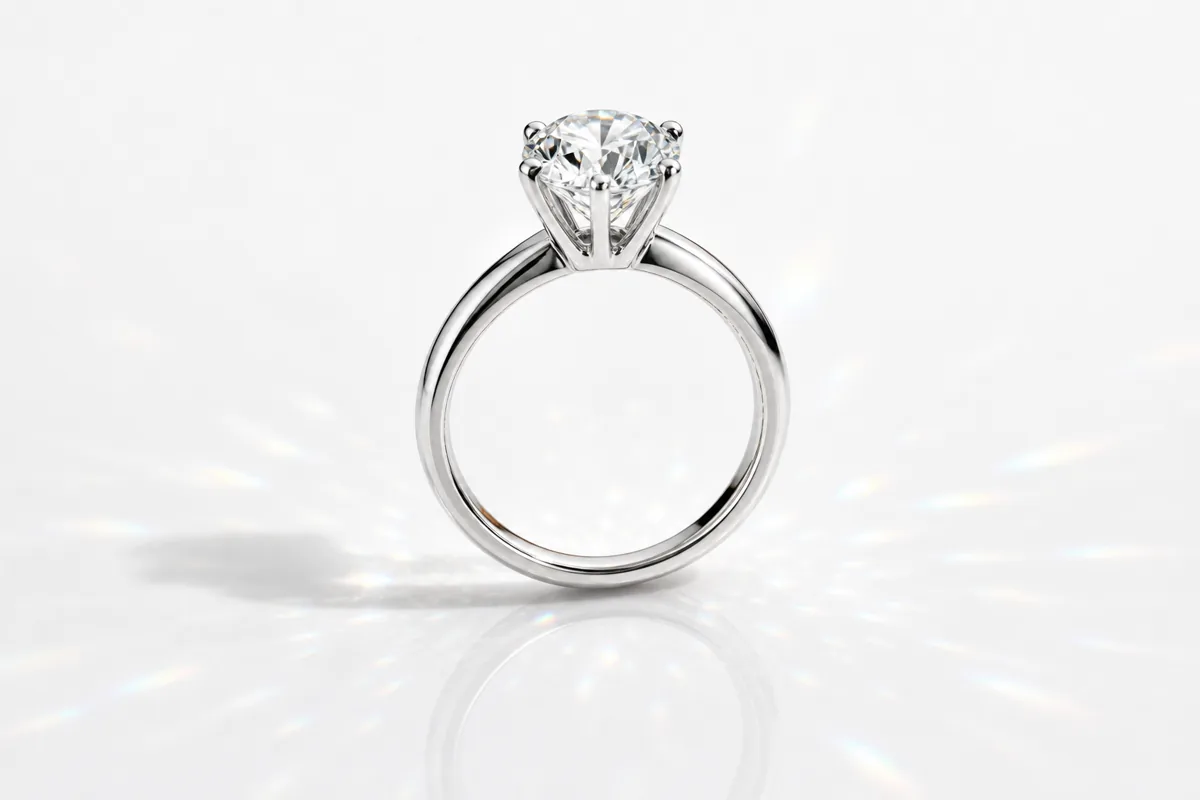
Sterling silver versus white gold
Sterling silver (92.5% pure silver) is affordable but reacts with skin oils and air, leading to tarnish. White gold is a gold alloy with a rhodium plating that gives a bright, silver-like appearance. It holds diamond prongs more securely and lasts longer in daily wear. If a retailer says silver-coloured without specifying the metal, ask for the hallmark.
Rhodium plating explained
White gold rings are typically rhodium-plated to achieve their bright white finish. The plating wears over time and needs replating every one to three years depending on wear. Platinum requires no plating and holds its colour permanently, though it costs more upfront.
Checking the diamond in a silver setting
Prong security is the first inspection point. In softer silver settings, prongs can loosen faster than in harder gold alloys. Before buying, examine that prongs grip the diamond firmly, with no visible gap between prong tip and stone girdle. A certified natural diamond with a GIA or other recognised report lets you verify what you are actually getting.
Buying from a South African specialist
Prodiam, based in Bedfordview, Johannesburg, inspects, values, and transacts certified natural diamonds. If you are considering a silver or white-metal diamond ring and want an independent view on the stone or setting, contact Prodiam at Prodiam.
Decision table
Use the details, not a shortcut.
| Metal type | Appearance | Durability | SA price range |
|---|---|---|---|
| Sterling silver (925) | Bright white, tarnishes | Softer, needs polishing | Lowest |
| White gold (9ct or 18ct) | Bright white with plating | Good, re-plate periodically | Mid-range |
| Platinum | Naturally white, no plating | Hardest, most durable | Highest |
| Palladium | Similar to platinum | Durable, lighter | Mid to high |
| Stainless steel | Silver-look, not resizable | Hard-wearing, low resale | Lowest |
Direct answers
Common questions
Is a silver diamond ring real silver?
Not always. Many rings described as silver-coloured are white gold or another alloy. Check the hallmark or ask the retailer directly. In South Africa, jewellery should carry a metal purity stamp.
Does sterling silver damage diamonds?
No, silver does not damage the diamond itself. The risk is to the setting. Silver is soft, and prongs can bend or loosen over time, increasing the chance of losing the stone.
How do I clean a silver diamond ring?
Use warm water with a small amount of mild dish soap and a soft brush. Avoid ultrasonic cleaners on silver settings, as vibration can loosen prongs. Dry thoroughly to reduce tarnishing.
Can I resize a silver diamond ring?
Sterling silver rings can be resized, though the process can weaken the metal if the ring is already thin. A jeweller should inspect the setting condition before resizing.
What is the price of a silver diamond ring in South Africa?
Price depends on the metal type, diamond carat, cut, colour, clarity, and whether the stone has a certificate. Sterling silver with a small diamond starts low, while white gold with a certified stone runs considerably higher.