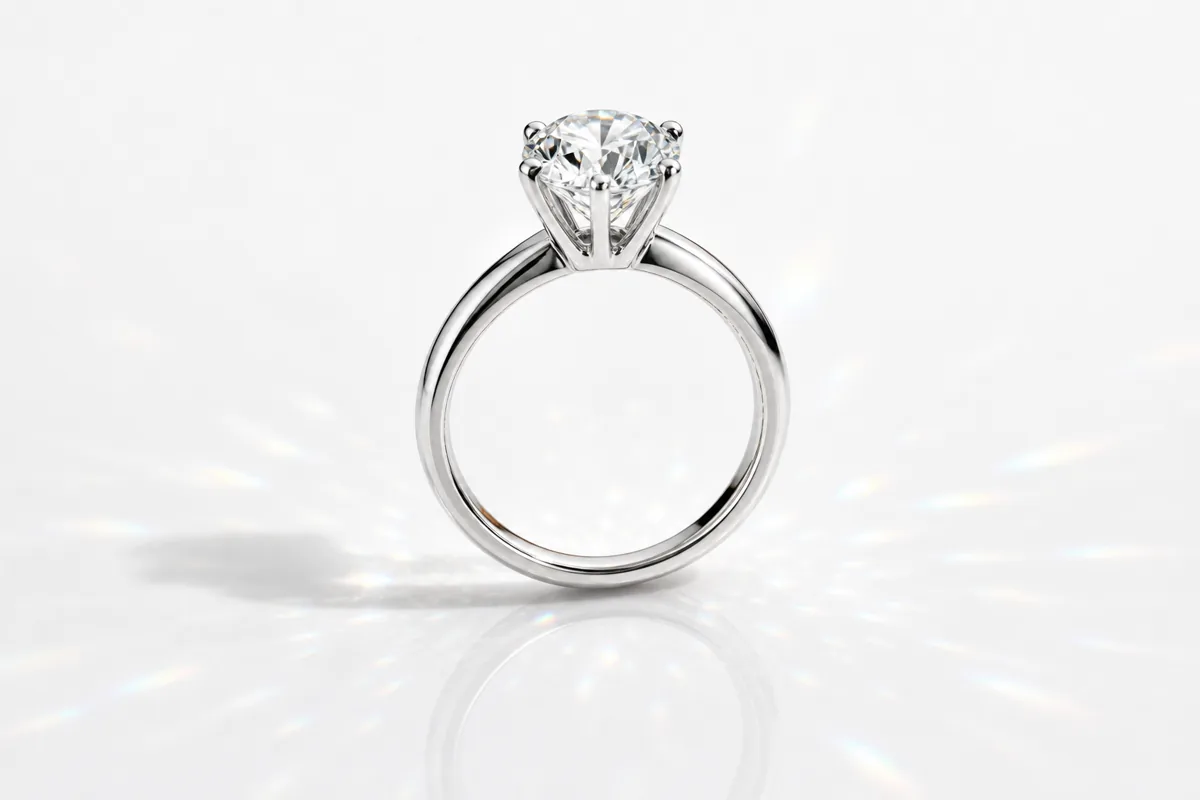
Princess cut
The princess is a modern brilliant-faceted square cut, introduced commercially in the 1980s. It returns high levels of light and suits buyers who want sparkle in a square outline. The four corners are sharp and need prong protection at each corner to prevent chipping. Clarity grades VS1 and above are recommended because the open facet pattern can show inclusions.
Asscher cut
The Asscher is a step-cut square with cropped corners and a windmill-like facet pattern under the table. It was developed in Amsterdam in 1902 and reflects art deco style. Step cuts show colour and clarity more readily than brilliant cuts. A D-H colour and VS2 or better clarity is a common recommendation for Asscher buyers.
Radiant cut
The radiant combines a step-cut outline with brilliant-faceted internals. It is rectangular or square and handles inclusions better than a princess because its many facets scatter light. Colour shows less obviously than in an Asscher. The radiant is a practical choice for buyers who want a square shape without strict clarity requirements.
Setting choices for square diamonds
Princess cuts need corner prongs. Asscher and radiant cuts with cropped corners can use four-prong cathedral settings. Halo settings around a square stone reduce visual sharpness at the corners but increase apparent size. Channel settings on the band pair well with all three shapes.
Decision table
Use the details, not a shortcut.
| Cut | Light return | Clarity sensitivity | Corner style |
|---|---|---|---|
| Princess | High, brilliant | High | Sharp, prong-protected |
| Asscher | Moderate, step-cut | Very high | Cropped octagonal |
| Radiant | High, mixed facets | Moderate | Cropped, more forgiving |
Direct answers
Common questions
What is the most popular square diamond cut?
Princess is the most widely sold square cut. Asscher has strong appeal in the vintage and art deco market. Radiant sits between the two in style and demand.
Does a princess cut chip easily?
The four sharp corners are a known vulnerability. Good prong protection at each corner reduces this risk significantly. Bezel settings eliminate the risk but change the look entirely.
What clarity grade should I choose for an Asscher cut?
VS2 or better is a common starting point. Step cuts show inclusions more readily than brilliant cuts, so buying at a higher clarity grade preserves appearance.
Is a square diamond ring a good choice for an engagement ring?
Yes. All three cuts, princess, Asscher, and radiant, appear frequently in engagement rings. The choice comes down to light preference, clarity budget, and style direction.
Can Prodiam source square diamond cuts?
Prodiam handles certified natural diamonds including princess, Asscher, and radiant cuts. Contact the Bedfordview office at Prodiam to discuss options.
How do I clean a square diamond ring?
Warm water and a soft toothbrush. Pay attention to the corners on a princess cut where debris can collect under prongs. Professional cleaning every 12 months is recommended.