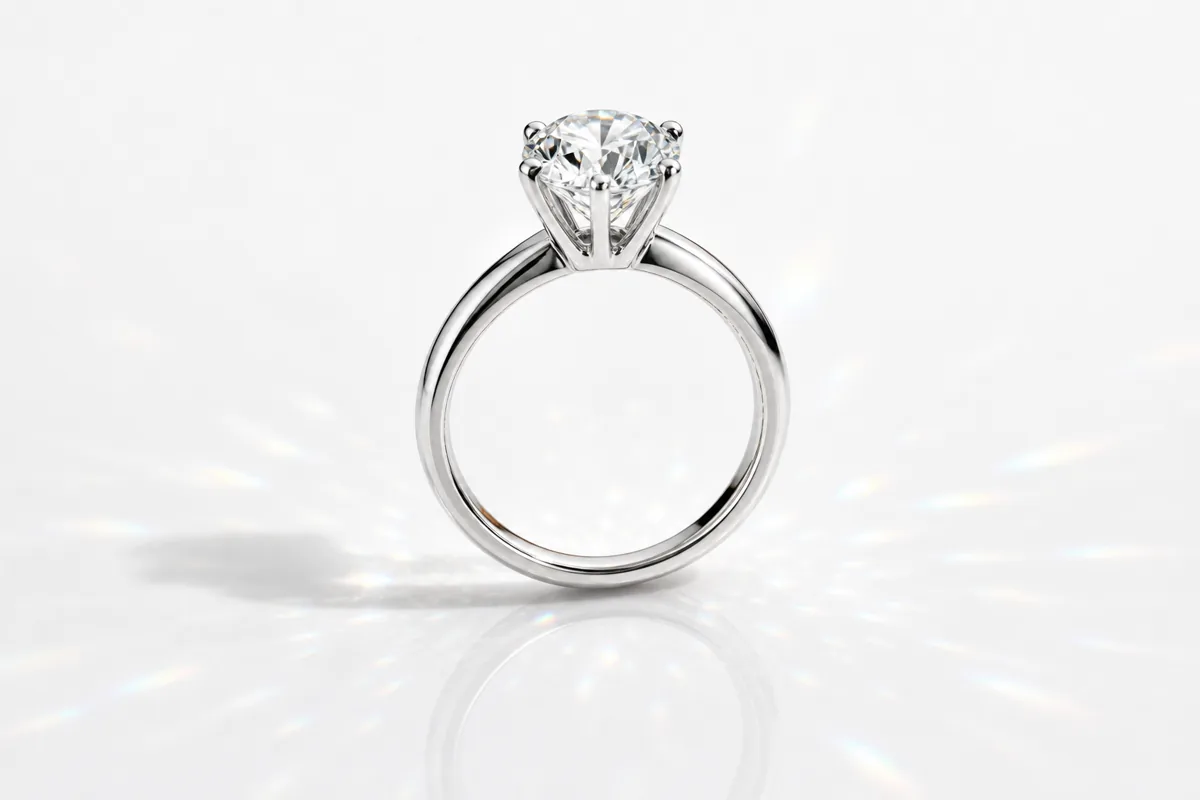
What white gold actually is
White gold is yellow gold alloyed with nickel, palladium, or zinc, then rhodium-plated to give it a bright silver look. The rhodium layer wears off over two to three years and needs replating, typically R300-R700 at a jeweller. Without replating, a slight yellow tint shows through on 9k and 14k alloys.
What yellow gold brings to the ring
Yellow gold is the most metal-stable choice. It does not need replating and its colour is consistent for life. For diamonds graded K and below, yellow gold can make a warmer stone look intentional rather than off-colour. In 18k (75% pure gold), it is durable enough for daily wear.
How the diamond grade changes the calculation
For diamonds in the D-J colour range, both metals work, but white gold shows the stone's whiteness cleanly. For K-M stones, yellow gold flatters the warmth. If resale matters, white gold with a well-graded stone often trades more predictably in the SA market.
Cost comparison
White gold rings usually cost slightly more upfront due to rhodium plating. Yellow gold in the same karat and weight costs similar raw metal value. Ongoing maintenance favours yellow gold. Prodiam can advise on which setting metals are available on specific certified diamonds and what replating costs to expect.
Decision table
Use the details, not a shortcut.
| Factor | White gold | Yellow gold |
|---|---|---|
| Maintenance | Rhodium replating every 2-3 years | None needed |
| Best diamond colour | D-J (colourless to near-colourless) | K-M (faint warmth) |
| Durability | Hardened alloy, wears well | Slightly softer at 18k, durable at 9k |
| Replating cost | R300-R700 per service | Not applicable |
| Resale | Widely accepted | Widely accepted |
Direct answers
Common questions
Does white gold tarnish?
Not in the same way silver tarnishes. The rhodium plating wears away and reveals a slightly warm yellow-gold base. Replating restores the white look.
Is 18k white gold better than 9k?
18k is 75% pure gold and generally more prestigious. 9k (37.5% pure) is harder and more scratch-resistant. For engagement rings in SA, 18k is the common choice but 9k is a practical budget option.
Can I change my ring from white to yellow gold?
A jeweller can remove the rhodium and rework the finish, but the alloy composition stays the same. A full remount into a new yellow-gold setting is the cleaner route.
Which metal is more popular in South Africa?
Both are common. White gold has been dominant in the last decade for engagement rings. Yellow gold is returning in popularity, particularly in cushion and round settings.
Does metal type affect diamond certification?
No. The GIA or IGI certificate describes the stone only. Metal type is a separate ring-building decision.