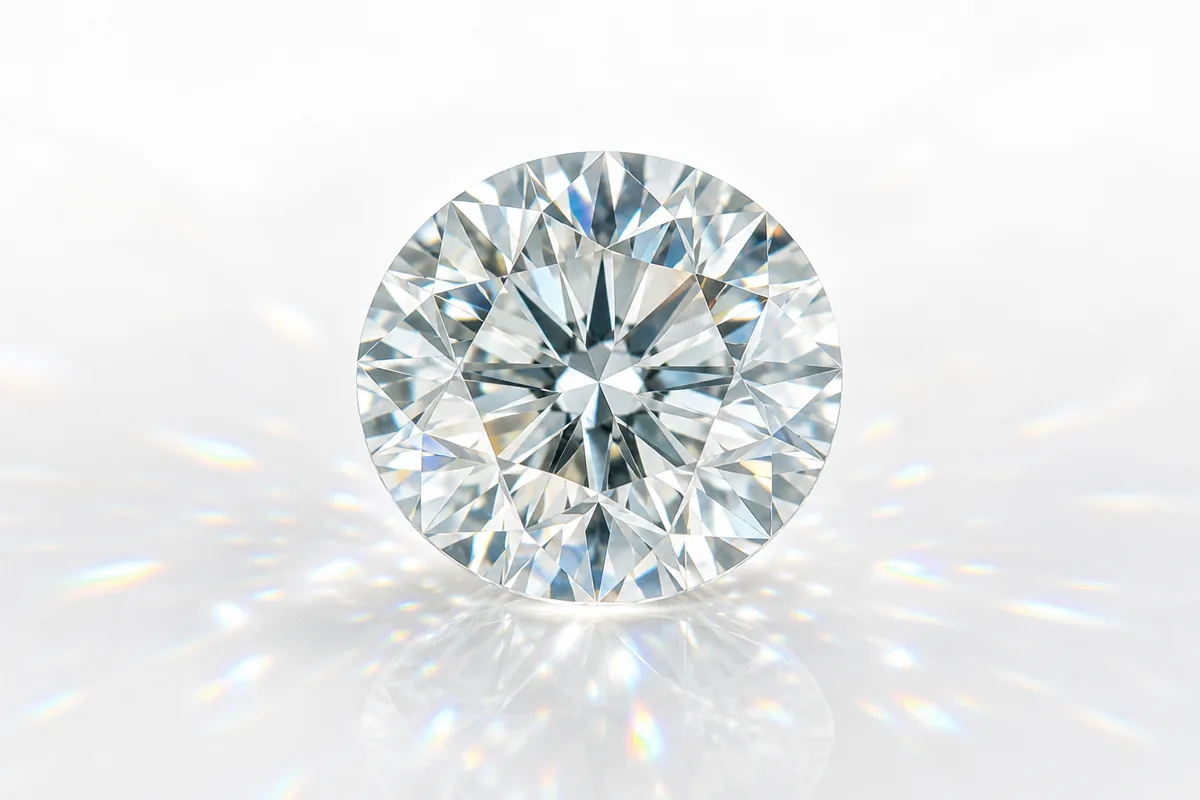
Physical rarity and formation
Natural diamonds form under extreme pressure and temperature approximately 150 kilometres below the earth's surface and are brought to the surface through volcanic kimberlite pipes. Not all kimberlite pipes carry gem-quality diamonds. Extracting diamonds at scale is expensive. The supply of gem-quality natural diamonds is genuinely finite, though not as restricted as marketing sometimes implies. One carat equals 0.2 grams.
Grading standards and price benchmarks
The GIA 4Cs system, developed in the 1950s, gave buyers a consistent language for comparing stones. Before standardised grading, diamond pricing was opaque and largely subjective. Consistent grading allowed a global market to develop with price benchmarks tied to measurable criteria. The Rapaport Price List is a widely-used trade reference for polished diamond wholesale prices, though retail varies from it.
Industrial and technological demand
Natural diamonds are the hardest known material (10 on the Mohs scale). Industrial demand for cutting, drilling, and polishing tools adds to total market demand, though most industrial use now uses synthetic diamonds. Gem diamonds serve a different market: jewellery and investment.
The South African context
South Africa has a significant diamond mining history. The Kimberley Mine (the Big Hole) is part of that history. South Africa continues to produce gem-quality diamonds. For South African buyers and sellers, the key practical point is that natural certified diamonds with recognised grading reports trade more predictably than uncertified stones. Prodiam in Bedfordview, Johannesburg, handles certified natural diamonds for buyers and sellers. Contact Prodiam.
Decision table
Use the details, not a shortcut.
| Value driver | Natural diamond | Lab-grown diamond |
|---|---|---|
| Physical rarity | Genuinely finite supply | Manufactured at will, increasing supply |
| Grading standardisation | GIA, IGI, HRD reports | Same labs, separate report type |
| Resale market depth | Active secondary market | Thin secondary market, rapid depreciation |
| Industrial usefulness | Historically significant | Synthetics now dominate industrial use |
| Consumer demand | Strong, multigenerational | Growing but newer market |
| Price transparency | Rapaport benchmark exists | Retail-only pricing, no established benchmark |
Direct answers
Common questions
Why do diamond prices vary so much?
Because the 4Cs create thousands of combinations, and each combination has a different supply and demand balance. A 1.00ct Fancy Vivid Yellow VVS1 is extremely rare. A 1.00ct J SI2 round brilliant is common. Price reflects that scarcity.
Are diamonds a good investment?
It depends entirely on the stone. Certified natural diamonds in high-demand categories (round brilliants, large fancy colours) have shown price stability over decades. Generic smaller stones in common grades are not strong investment assets. There is no equivalent to a stock exchange for diamonds.
Will lab-grown diamonds affect natural diamond value?
They already have in some grade ranges. Laboratory-grown diamond prices have dropped sharply as production scales. Natural diamond prices for certified top-grade stones have been more stable. The two markets are separating.
Why does South Africa have a diamond industry?
The discovery of diamonds at Kimberley in 1867 and the subsequent Witwatersrand mining boom established South Africa as a major source of gem and industrial diamonds. South Africa still produces natural diamonds, though production levels have changed from the peak mining era.
Where can I get a diamond valued in South Africa?
Prodiam in Bedfordview, Johannesburg, inspects and values certified natural diamonds. Bring the stone with its grading report for the most accurate assessment. Contact Prodiam, Suite F1W6, The Paragon, 1 Kramer Road, Bedfordview.