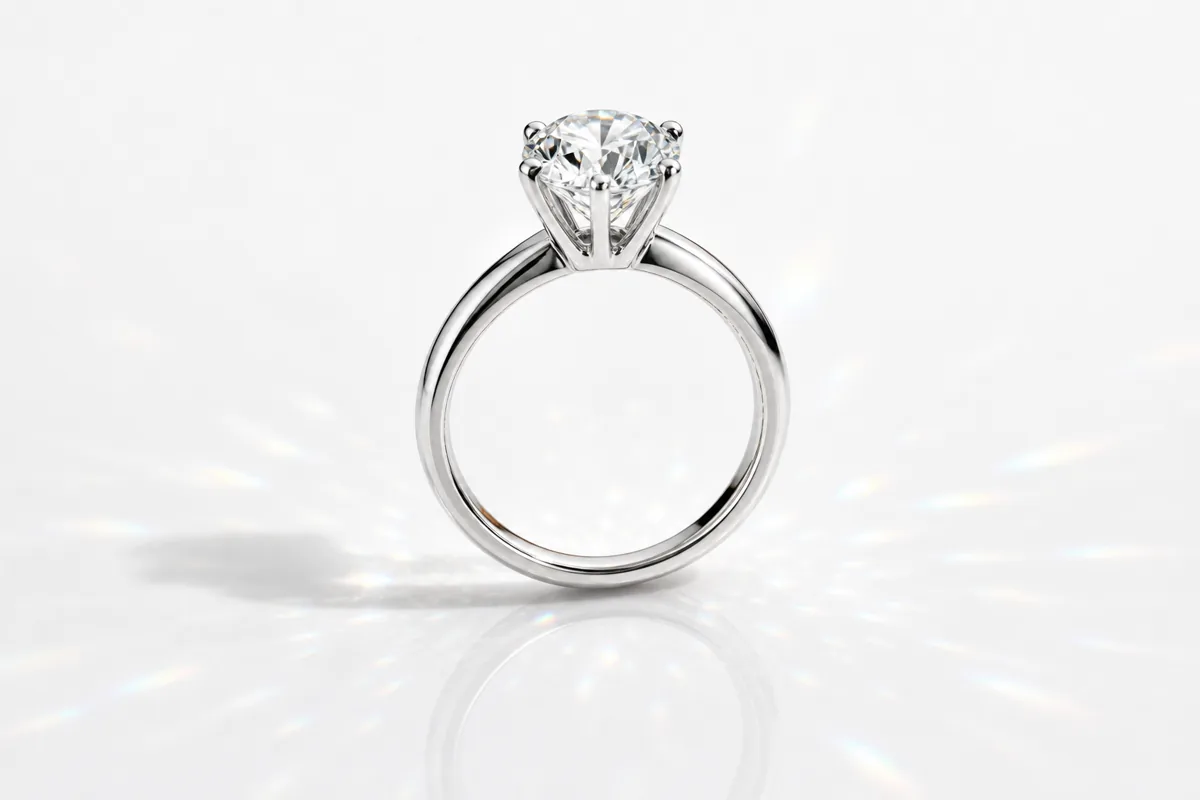
Judging diamond wedding rings the way a valuer does
A diamond ring is four assets wearing one price tag: the centre stone, the side stones, the metal, and the workmanship that holds them together. Valuers separate them instantly, because the centre stone usually carries most of the value and the setting usually carries most of the risk. Whether you are buying, insuring, or selling diamond wedding rings, the same separation keeps you honest.
The ring-specific checks that change outcomes
Centre stone first: its 4Cs, certificate, and make matter more than everything else combined, so read it as if it were loose. Then the mount: prong tips wear thin and lose stones; shanks thin from years of wear; old repairs and replaced heads show under a loupe and affect both safety and value. Ask about resizing history, because aggressive resizing stresses settings. Read the stamps inside the band for metal fineness and maker marks. Decode total carat weight: forty small stones adding to one carat are not remotely the value of a one-carat centre, though both can be advertised with the same number. And with inherited rings, resist the urge to polish and repair before a valuation: originality and patina are information, and sometimes value, that cleaning erases.
Where ring money quietly leaks
Buyers leak money by paying centre-stone prices for clusters and TCW; owners leak it by insuring at guesses, under-insuring after years of replacement-cost drift, or scrapping settings whose workmanship had value. Sellers leak it by letting one weak element drag the whole piece to a scrap-level price, when separating the stone from the metal in the conversation would have priced both fairly.
When Prodiam is the right next step
Use the checklist about estate diamond jewellery. 4Cs.co.za is published by 4Cs.co.za: the education is free, the disclosure is permanent, and the specialist conversation is there when a real stone needs one. Bring the certificate or report number, photos in plain light, and any invoices or valuations, and the conversation starts from evidence instead of guesswork.
Decision table
Use the details, not a shortcut.
| Element | What to establish | Common surprise |
|---|---|---|
| Centre stone | Certificate, 4Cs, make, condition | Chips hidden under prongs |
| Side stones | Count, match, none missing or replaced | Mismatched later replacements |
| Metal | Fineness stamps, weight, condition | Plated or mixed components |
| Workmanship | Brand or maker marks, repair history | Signed work scrapped at metal value |
| Documents | Certificate, invoice, valuations, photos | Papers describing a different ring |
Direct answers
Common questions
Is total carat weight the same as the centre stone's weight?
No. TCW adds every diamond in the piece. A ring advertised at one carat TCW may have a small centre surrounded by melee, which is a very different asset from a one-carat centre stone.
Should I repair or clean a ring before selling it?
Have it seen first. Light professional cleaning is fine, but repairs, repolishing, and replating can erase originality that a specialist wanted to see, and the spend rarely returns itself.
How often should ring insurance values be updated?
Review the valuation every few years or after sharp currency moves, because replacement costs in rand drift. An outdated valuation either under-protects you or overcharges premiums.
Do settings add value when selling?
Quality and signed workmanship can. Generic settings mostly return metal value. The centre stone is usually where the money is, which is why it should be judged like a loose diamond.