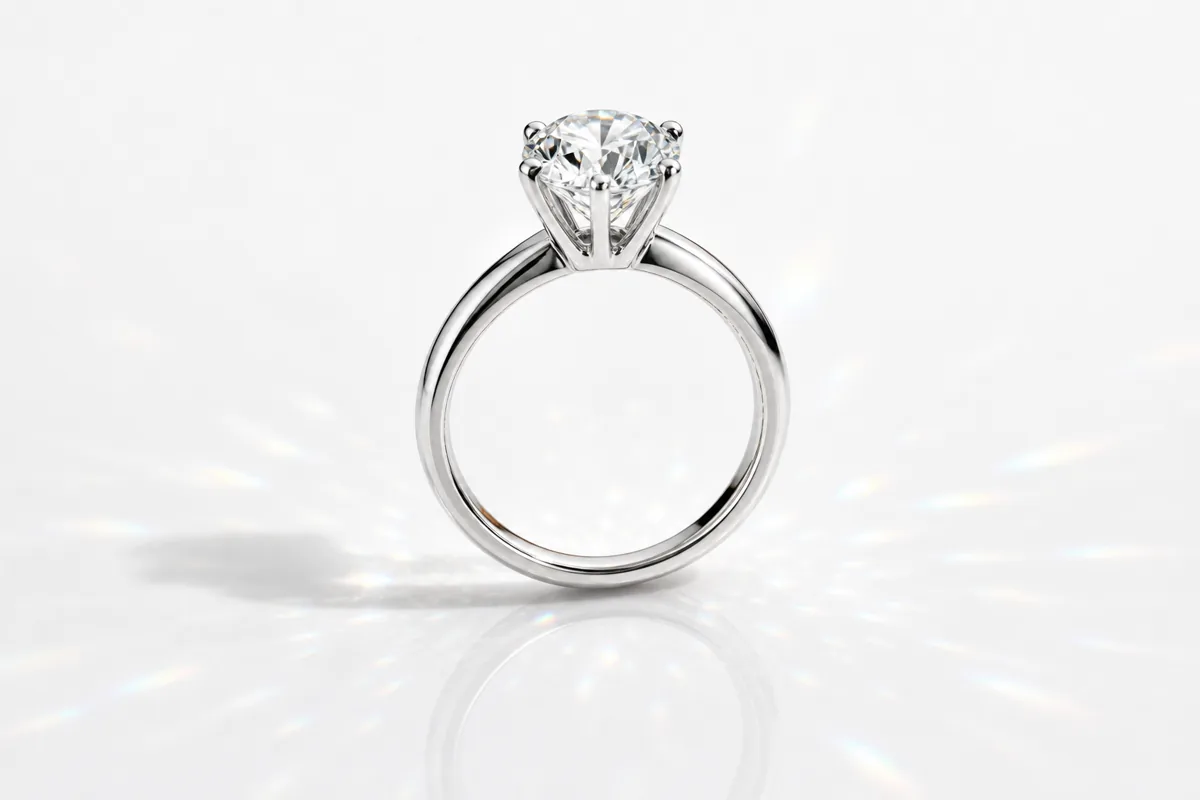
Setting styles suited to men's rings
Channel-set and bezel-set diamonds are the most practical choices for men's bands. Both protect the stones from side impact and reduce the risk of a stone working loose. Flush or burnish settings, where the diamond sits level with the metal surface, are increasingly common for men who work with their hands.
Diamond size and proportion in a men's band
Men's bands are typically 5-8mm wide. This width allows for larger accent diamonds or a row of channel-set stones that are visually proportionate to the band. Very small pavé stones can look lost in a wide men's band. Matching stone size to band width creates a cleaner result.
Metal choice for active wear
Tungsten carbide is scratch-resistant but cannot be resized or cut off in an emergency. Titanium is lightweight but also not resizable. Platinum and white gold are resizable and repairable, with platinum being the most durable of the precious metals. For a diamond-set men's ring worn during physical activity, platinum or 9ct gold offer the best combination of repairability and toughness.
Certification on men's bands
Smaller accent diamonds in men's bands often come with a general piece description rather than individual stone certificates. If you are investing in a men's band with larger feature diamonds, ask for individual certificates. Prodiam in Bedfordview handles certified natural diamonds and can assess individual stones or finished pieces for men considering purchase or resale.
Decision table
Use the details, not a shortcut.
| Metal | Scratch resistance | Resizable | Best for |
|---|---|---|---|
| Platinum | Medium | Yes | Daily wear, precious metal preference |
| White gold (18ct) | Medium | Yes | Budget vs platinum, needs replating |
| Titanium | High | No | Active lifestyle, no diamond setting |
| Tungsten carbide | Very high | No | Scratch resistance priority, no diamonds |
| Yellow gold (9ct) | Lower | Yes | Traditional look, budget option |
Direct answers
Common questions
Are diamond wedding bands for men practical?
Yes, if the setting is chosen for the wearer's lifestyle. Channel and bezel settings protect stones during physical activity. Flush settings are even more secure for manual workers.
What size diamonds are typical in a men's wedding band?
Men's bands usually feature smaller accent diamonds, often between 0.05ct and 0.15ct per stone in channel or flush settings. Feature stones in a centre position can be larger.
How wide should a men's wedding band be?
Most men choose between 6mm and 8mm width. Narrower bands look lighter; wider bands carry more visual weight. Try different widths before deciding.
Can a men's diamond band be engraved?
Engraving is possible on the inner surface of most men's bands. Width and metal type affect how deep an engraving can go. Ask before purchase if engraving is planned.
Do men's diamond wedding bands hold resale value?
Resale value depends on the diamond quality and certification, not just the band metal. Certified stones in documented grades trade more clearly than uncertified ones.
Is a men's diamond band different from a women's?
The main practical differences are width, setting robustness, and stone proportion. Many men's diamond bands use the same diamond grades as women's rings, just in a wider, more durable setting.