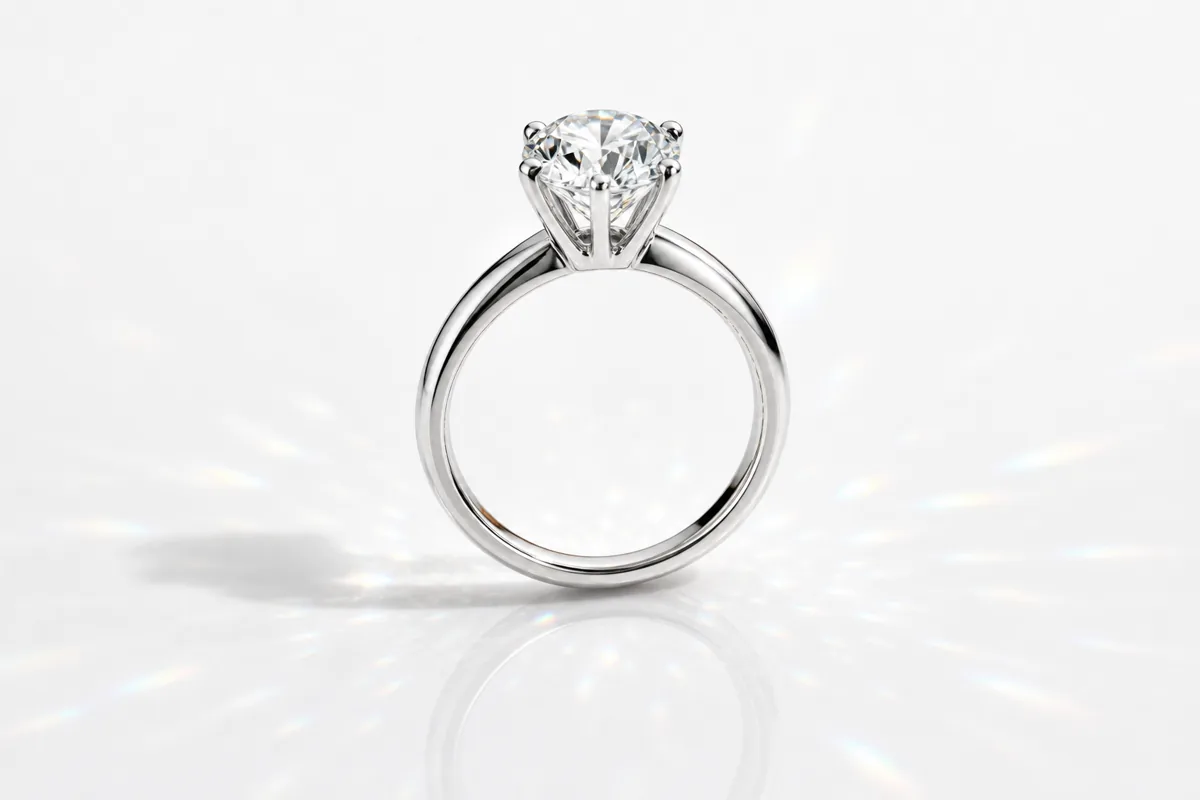
What princess cut diamond ring changes about inspection and value
Shape is not styling alone. It decides how a diamond shows colour and clarity, how durable its edges are in daily wear, how big it faces up for its weight, and how quickly it resells. Round brilliants even carry an official GIA cut grade, while fancy shapes do not, which moves more of the judgement onto your eyes and your adviser's.
Shape-by-shape, where the risk concentrates
Ovals and marquises: look for the bow-tie, a dark band across the middle that ranges from charming to dead; only the eye can grade it. Pears and marquises carry points that chip, so the setting must protect them with prongs placed on purpose. Emerald and asscher cuts are windows: they hide little, so clarity and colour budgets must rise a band or two compared to brilliants. Princess cuts carry vulnerable corners that good settings cover. Cushions vary enormously in facet pattern, so two cushions with identical paper can look like different products. And across all fancies, spread matters: some stones hide weight in depth and face up small, which the measurements on the certificate reveal before your eye does.
The shape mistakes that show up later
They are predictable: a bow-tie discovered after purchase, a chipped point that was always going to happen in that setting, an emerald cut bought on a brilliant-cut clarity budget, and a fancy shape bought at a premium that the resale market would not return. None of these are visible in a grade letter. All of them are visible in the stone.
When Prodiam is the right next step
Use the checklist to inspect the certificate and setting security. 4Cs.co.za is published by 4Cs.co.za: the education is free, the disclosure is permanent, and the specialist conversation is there when a real stone needs one. Bring the certificate or report number, photos in plain light, and any invoices or valuations, and the conversation starts from evidence instead of guesswork.
Decision table
Use the details, not a shortcut.
| Shape | First thing to inspect | Watch-out |
|---|---|---|
| Round brilliant | GIA cut grade, then light in plain daylight | Paying for letters the eye cannot see |
| Oval and marquise | Bow-tie severity by eye | Points and tips unprotected |
| Pear | Symmetry of the belly and point protection | Chips at the tip |
| Emerald and asscher | Clarity and colour through open facets | Window effect showing everything |
| Princess and cushion | Corner protection; facet pattern variation | Identical paper, different looks |
Direct answers
Common questions
Why is there no GIA cut grade for fancy shapes?
The system was built for round brilliant proportions. Fancy shapes vary too much for a single proportion model, so their cut quality is judged by symmetry, light behaviour, and the eye.
Which shape gives the most size for the money?
Fancies often face up larger per carat than rounds, with ovals, pears, and marquises strong in spread. Verify with the measurements rather than the carat figure: spread is shape times proportions, not weight.
Are fancy shapes harder to resell?
Rounds are the most liquid. Fancy demand moves with fashion, so resale planning should be more conservative on trend-driven shapes.
Does shape change which clarity grade I need?
Yes. Step cuts like emerald and asscher reveal inclusions that brilliants hide, so they generally need a higher clarity band for the same eye-clean result.